Friday, May 2, 2008

Loss of my virginity

I had taken to the affectation of a cane lately, a rather lovely golden cobra-headed number which actually did aid my stride, ameliorating a small foot injury I suffered in Barcelona in 'ought-3 at the hands of the green muse and its cousins.  Using the cane of course brought to mind the riddle of the sphinx, asked before she strangled and devoured those who failed to answer correctly, to wit: which creature in the morning goes on four feet, at noon on two, and in the evening upon three?  Greek grammarians tried to make the connection between sphingein (to bind tight) and sphinx, but according to my old Britannica, the etymology is dubious. But drawn into this associational vortex is the recent clamoring of a number of my women friends to serve a fantasy of mine in the leading of a public deflowering, to be bound tight inside my body (ahem, as it were), much like the Vugusu who required the bridegroom to deflower the virgin bride in public, until the poison of modernity left too few virgin brides available for this ritual‡, but Lynne has maintained that this right of possession is hers and hers alone. So this fantasy, like so many of my tired life, has disappeared, as the cane also has gone the way of all things, broken and left under the glaring eyes of the oh-so-watchful Swiss TSA-equivalents.

African Marriage and Social Change, Lucy Philip Mair, p. 50 and Black Hearts, The Development of Black Sexuality in America, Nick J Myers III, p. 3.

Thursday, May 1, 2008

Name in Print

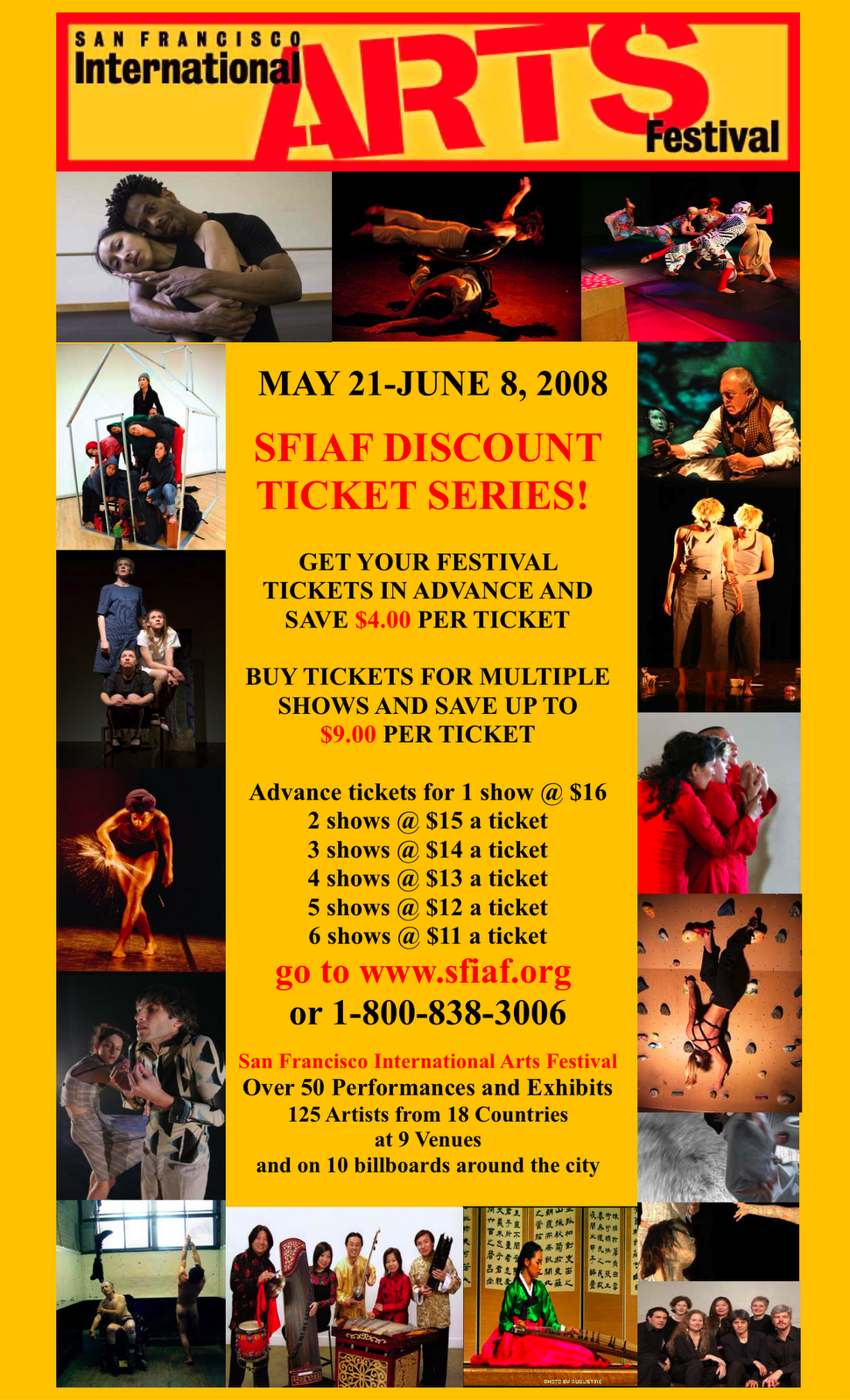
Theatre Bay Area Magazine is featuring Mordake on the cover as part of an article about the SF International Arts Festival.  The article quotes me quite a lot, even going so far as to extemporize a bit beyond what I may have actually said. But what the hey.  


Wednesday, April 30, 2008

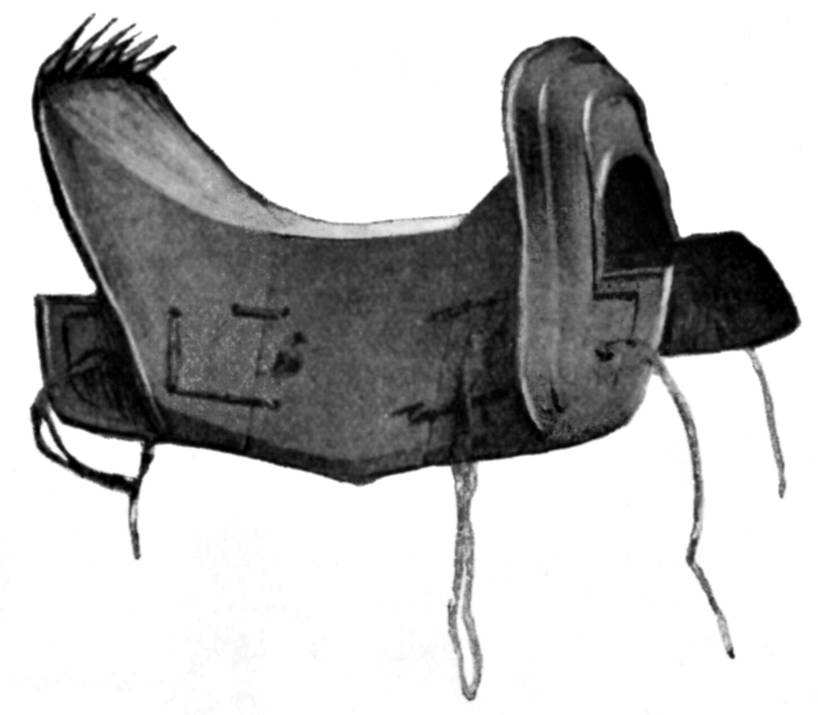
Dying in the Saddle

from the wikipedia article on Louis Vierne:

Vierne suffered a heart attack while giving his 1750th organ recital at Notre-Dame de Paris on the evening of June 2, 1937. He had completed the main concert, which members of the audience said showed him at his full powers - "as well as he has ever played." After the main concert, the closing section was to be two improvisations on submitted themes. He read the first theme in Braille, then selected the stops he would use for the improvisation. He suddenly leaned forward, clutching his chest, and fell off the bench as he hit the low "E" pedal of the organ. He lost consciousness as the single note echoed throughout the church. He had thus fulfilled his oft-stated lifelong dream - to die at the console of the great organ of Notre-Dame.

I've fantasized about two modes of death: one rather like the above, but peacefully in my sleep, the completed but not-yet-fully orchestrated manuscript of my own Requiem Mass slowly spilling off my night table; the other more akin to the death of Nelson Rockefeller.  

Sunday, April 27, 2008

Mordake Visuals, Construction, Music et al

routeI was informed by electronic post late last night that Lynne has been blogging her work for Mordake. As of yesterday morning I finally finished setting the last of Douglas's text, almost just barely too late as we really are in the middle of rehearsals, and Herr Weiß is here only for another week or so, and M. Duykers is back in Florida performing final excruciations on his students. Several would-be assistants had other projects interfere with their participation, but luckily our friend Diana showed up direct from Amersfoort NL, firmly gripped the handle of our construction problems, caused the Jack in the Box to pop out, and has left us all deeply satisfied with her work. 

Mary Ellen Hunt dropped by to interview Frieder and me for a mention in the Chronicle's article about the SFIAF, but we've been corresponding a bit about those people who, like Mordake are double-faced.  She referenced the young Indian girl who is believed by some to be a reincarnation of Ganesh, I countered with Chang Tzu Ping (with a nod to the recent alleged Lakshmi reincarnation), and then on to various other facial tumors and skin ailments and so on. These photos disturb me a bit even though I wish I could just accept them as part of the continuum of human styles and substances.  Like the murder victim we happened across today draped with a cloth and surrounded by police tape and squad cars, they seem to remind me too much of my own fragile physical nature, one step away from worm dirt.

Tune of the day

Angus Dei

Thursday, April 17, 2008

3½/4

As a milksop, I've been reticent to specify the true nature of some rhythms I use commonly, so I'd like to say here for those of you listening that when the pulse is basically quarters (say) and I write a time signature of 7/8 (say), what I really mean is 3½/4 or 3/4 + 1/8 or 3.5/4.  I've tried to explain this to a number of conductors in the past but they've scowled at me and tossed their hair and brushed me aside and explained that this is simply not possible, that they can't have a dangling ½ a beat andthen  proceed to conduct it as 2 2 3, which really is not the same, now is it? I mean, it's *really* goddang not the same! So why do I allow it? Well, see the definition of namby-pamby in your well-thumbed English-English dictionary.  

Looking back, I was clearly infected with such jumpy skittery rhythms by their common usage in the pop music of my youth, e.g., Led Zeppelin's Ocean, which features an ostinato alternating between 4/4 and 3½/4. My high school was a hotbed of wannabe progressive rock musicians and often featured such at the oral-sex-and-alcohol-fueled parties which I would have attended except for my aforementioned milksopish milquetoastishness, but sometimes, leaving the SQ-encoded recording of Petrushka playing on my quad hifi, I would sneak outside in my bunny footed yellow pajamas to peek in through the window, to hear them playing excerpts from such devil-besotted music, their long locks swaying to the beat, sweat dripping down their bare chests, a slide show of one of them dressed in their SCA finery projected on the walls while their girlfriends (ah, girlfriends!) waited for it all to stop so they could put on their singer-songwriter LPs and make out with their BFs, lost in a romantic fantasy, fingers and lips searching and probing the limits of their young love.

Tuesday, April 15, 2008

Ode to the Shy Monk

Review of the Missa came out today in the St. Gallen Tagblatt.  Google's automatic translator produces this, which is a bit poetic, viz "Major outbreaks searches in vain."  Listening to the recording from Sunday in the clear but jet-lagged light of day today, which I've put up here, I realize that they did do a beautiful job.  


Worlds in Collision


Was reading my copy of IEEE Spectrum this morning at 5 am and found a description of my friend Frieder's work. Very beautiful.  Looking forward to working with him again in just a few days.

Sunday, April 13, 2008

Rhythms, Bells, St Gallus and the Bear

After four years hanging over my head, the Mass finally premiered last night, and hanging over my head was the above: St Gallus in the company of the bear with whom he traded sandwiches for firewood, and, to continue this trope past the point of enjoyment, I woke up hung over after the free-flowing alcohol-laced VIP reception, where, just like Scrappy and his friend, we decided in our stupor to ring the doorbells and wake up the bishop but succeeded in waking only his sister as he was out "on assignment." Thank God for Europe where they still seem to sell out houses - and a mighty big House o' God in this case - for brand spanking new music and where they seem to applaud and applaud and applaud to the point of embarrassment (although this discomfort is one with which my vanitas can well live). Kim Brockman was the soloist and stole the show with her effortless navigation of the 23rd Psalm which, I have to say, is really just more or less in a simple 3/4, but the accompaniment tends to confuse. 

Speaking of confusion, even though over in Kyle Gann's heaven of stratospheric beauty, present concerns are partial tuplets and non-power-of-two-denominator time signatures, down here wallowing in the mud of the temporal world, I would be just a little bit happier in my insignificant existence if I could be assured of accurate non-partial tuplets and power-of-two-denominator time signatures and reliable groupings of 8ths and 16ths at moderate tempi that don't quite hit the downbeats. But the performance was lovely, and the circle of communication from composer to performer to audience and back again was closed very nicely, and I was overjoyed just to experience it all in such an over-the-top goopy-rococo environment. 

The performance was in the choir - which you can see here - using one of the two mechanically connected baroque organs. The stiff action necessitated a simplification of the faster parts of the Credo. I wrote a quick Postlude as a bit of espresso or maybe dolce to wake up the audience after a long period of contemplation of our insignificance and the certain oncoming freight train of death, etc, but it turned out that even my delightful insouciance was a bit beyond the very limited rehearsal time for Willibald, so we had to cut the (as I call it) Terry Riley section, that with one meter for each limb (although really two are in the right hand and one is split between the feet), but as to the remainder, as Duncan put it, Willibald hit it.

The best part of performing in the Dom Kathedral is that, every fifteen minutes, there is a small but very clear bell part added to the piece, almost always in just the perfect place, so much better than the added ambulance sirens of my mostly urban performances, and in fact I herewith formally add the instruction to the score: play a clock chime or two or maybe even a few more every fifteen minutes starting at a random time offset (well, actually at five minutes before the quarter hour marks as we need to give the brothers time to dust off the knees of their robes and get themselves to tend the radish garden or whatever) and please don't be stopped by the fact that the soprano is just now putting herself in the proper mood for her emotive solo or the fact that the music is really really really quiet, OK?

(photo by Lynne)

Friday, April 11, 2008

Me in a funny hat

How I am perceived by the Swiss press.

Wednesday, April 9, 2008

Lake Como

Looking over Lake Como from our room at the Bellavista in Valmedrera at the town of Lecco in the distance, where my filmmaker friend Ilaria lives. Lynne says the bell tower is typical Lombardy.  Bellagio, the real one, is just north of here, famous in my circles for the Rockefeller study center. Ron Kuivila told us that his residency there consisted of one unbroken cocktail hour. The hoteliers speak Western Lombard, not sure which dialect.

Tomorrow we take the trip over the alps in the opposite direction of Hannibal, sans war elephants, but with pillaging, conquest and victory on my mind at least, into the land of Schweizerdeutsch.

Monday, April 7, 2008

Ruth's Kosher Vegetarian Restaurant

Image:Synagogue di Firenze.jpg
We had several great meals in Florence. First was a traditional Bistecca alla Fiorentina and the second was just around the corner from the synagogue (above) at Ruth's Kosher Vegetarian Restaurant.  The former because of the enormity both in mass and taste and the second because the owner regaled us with stories of his days in Prague in the bad old days of the Soviet repression: how he hung out with Vaclav Havel (he had a book of photos of the two of them and various other hippie types), about the Plastic People of the Universe (including where they all are now), about the Velvet Underground (and how the Velvet Revolution was named after them), about the importance of Frank Zappa to their culture, about how they carried copies of the White Album with a label peeled off a Smetana LP, and how the best Milos Forman film is Taking Off.  

Friday, April 4, 2008

More devils than birds in the sky

A great number of demons in the Vatican, some quite voluptuous, some rakish, some horrific, but all kinda appealing. While we all hope for an eternity spent in quiet contemplation of the Celestial Visage, the fires of Hell and the activities of its residents make a far more winsome subject for the visual arts.  

Luigi Dallapiccola

My son said yesterday that it would be expedient for me career-wise to spend a bit of time in prison, especially for a political crime. Maybe that's more likely currently, here in the land of Mussolini and Berlusconi than back in the sun soaked bliss of whatever San Francisco. In Roma my thoughts have turned to the various Italians I have known and loved: Nono and Berio and Dallapiccola. The budding latter young Luigi did spend some career enhancing time with his family in a camp for subversives in Graz, the hometown of our own favorite California National Socialist and Führer, but the connection today is a mention of myself in a discussion here on whether Dallapiccola may have wanted to have his music played in JI or some other non-equal tuning system. I felt compelled to correct a small error. A statement on the Minnesota Multiphasic Personality Inventory: I often need to correct others' mistakes, answer yes. JI and tuning history in general is still so misunderstood, and the recentness of the God-given nature of 12 equal so little known, that I do feel I need to say something from time to time just to rail against the darkness etc. Once again I feel the need to retune my life and music a bit.

Sunday, March 30, 2008

Desire Line

art5_08

Thom Blum had a beautiful installation at the Cowell Theater last night, comprising a long hallway, a collection of friends' ipods and an assortment of speakers donated by Boston Acoustics.  I've been hearing him talk about the piece as it developed, but it was far more striking and far more intense than I imagined.  Having experienced it, I don't know why he hasn't done installations like this before, because it so perfectly connects to his oeuvre. A number of his concrète pieces are travelogues: recordings made from captured sonic landscapes of far away places. Years ago he wanted to build a Walkman/iPod-like device that would process the sound around you and feed it into your earbuds.  The new work is a travelogue of sorts, a collaboration between Thom and one's perambulation through it, glimpses of sound and music past and present near and far, including a modified bit of The Comfort of Solitude from The Bed You Sleep In. Oh, let's listen for a moment to that old chestnut, shall we?


The hallway led to a performance of Deborah Slater's Desire Line, one of her best works, featuring a number of my favorite dancers and social-networking site friends: Kerry Mehling, Travis Rowland, Shaunna Vella; and based on the paintings of Alan Feltus (see example above).  Travis and Kerry dance as one person, both amazingly fluid and strong, with spectacular moves following in unanticipated succession.  And the all-important-and-possibly-my-reason-for-being-in-the-arts cast party was a religious ecstasy of salmon and flan incroiable and broken glass and Absolut and lithe inked flesh in 104° water. Some parts of it seem to be missing after the fifth tumbler but even though Lynne had to leave early, driving off in her rented Mercedes, I'm relatively sure I was nothing if not the perfect gentleman in the aftermath.

Tuesday, March 18, 2008

When and Where


Missa Beati Notkeri Balbuli Sancti Galli Monachi

Samstag, 12. April 2008
19.15 Uhr
Kathedrale St. Gallen

Sonntag, 13. April 2008
17.00 Uhr
Kath. Pfarrkirche Jona

Sunday, March 9, 2008

Poultice o' my heart

Concert of the SFCCO last night playing Mordake Suite Number 2, the darker one. Edward Mordake hisself was there to see it, as he enjoys a variety of methods of instantiation, in this case in Jennybird's doll form. Here's a recording of it hot off the press:


Also, the San Francisco International Arts Festival 2008 site went live today. The direct link to tickets for the Mordake premiere is here and I've been told there is a significant early bird discount.

Monday, March 3, 2008

Meditation on Jon

Composing music is a strange ephemeral artform, constructing something from the almost nothingness of sound, pressure-wave vibrations of the air.  But this strange ephemera is somehow able to touch deep inside the listener, bringing up emotions and reactions pleasant and unpleasant but impossible to ignore. In the films of the Hollywood mainstream, the emotional power of music and its ability to pass by the viewer's defenses is often used to manipulate, to subliminally broadcast to the listener how they are supposed to feel. But music in Jon's films is different. Although it carries a large part of the emotional weight of his films, it is not a hidden wedge into the viewer's heart.  In fact, it is usually banished from those scenes which are the most directly narrative and kept to those long minimal moments of repose that are so dear to Jon.  It is given an equal billing, with narrative, with the landscape, with the characters, part of a set of parallel threads that each relate to the viewer a different aspect of the story.


I first met Jon at a screening of All the Vermeers in New York at the Pacific Film Archive in Berkeley California. The producer, Henry Rosenthal, whom I had known through the Just Intonation Network years before, called me and told me I had to come, that it had been a labor of love and that he was quite proud of it. When I saw it, I was enraptured.  I loved the look of it, the pace of it, the feel of it, and especially the music by Jon English.  It was such a musical film, both indirectly, with a feel for rhythms on the short and long and architectural scale and directly, leaving space for musical development that Jon English filled so beautifully, especially in the long tracking shot dancing among the columns of the lobby of some Wall Street location.  


A few years later, as Jon Jost's Sure Fire needed to be finished for its debut at Sundance, Henry called me while I was staying in a room in a businessman's hotel in Japan that was the size of a smallish shoebox and told me that Jon English was too ill to finish the music, in fact that he had written only a short melody for pedal steel; that the music had to be done in a couple of weeks; that it needed to be in a country style and that it also had to be in just intonation.  I jumped at the opportunity.  When I returned from Japan, I got a videotape of the film in its almost-finished state and wrote the music very quickly, sketching out a primarily synthesized score, starting from the melody that Jon English had written, and bringing in his pedal steel player to improvise with me. There were some brief meetings with Henry and Jon Jost, where they pointed at large problematic sections and told me to fix them, but mainly I was left alone to do what I wanted inside the constraints of no budget and no time. Jon did tell me there were some important numerological features of the film centering around the number 13, which I worked into various rhythms and various pitch ratios.


As Sure Fire was completed and as Jon and I spent more time together, we had an opportunity to work in a more relaxed fashion. He started to tell me of his plans for the next film, The Bed You Sleep In.  Jon had written bits of a script and said that he wanted some music done before production so that he could play it for the actors while they were working.  He also told me one of his recurring ideas, that he had always wanted music that naturally came from the location sound, sometimes imperceptibly.  But he also wanted real music, not just sound, and I suggested a mixture of classical and folk and electronic instruments, and a mix of classical and popular styles.  

From the notes to the CD: 


During the production of the film, John Murphy, who was doing the location recording, took me into the sawmill featured in the film.  Walking through the mill was like listening to a great industrial/futurist composition, the sound wonderfully dense and richly spatialized.  The sounds and smells of the local mills, especially the Georgia Pacific plant, were present throughout the town of Toledo.  The sound of the GP plant was audible in all the location recordings, whether inside or out.  The plant sat at the side of a tremendous chemical lake, a dirty brown pool with fountains spraying noxious liquid in large plumes up from the surface.  Its presence so overwhelmed me that, at one point, I had decided to do all the music using the sounds of the mill and the GP plant.  In the end, I used a variety of sound sources.  Some of the music, notably that which frames the letter scene, is generated almost entirely from sampled and processed recordings of the mill made by John Murphy during the production.  Some of these samples are used as instruments in other pieces and are mixed with the acoustic instrumental ensemble. [...]


After the production, Jon and Mark Redpath started editing and I began to see the film that didn't exist in the screenplay.  There were many long, static shots where Jon wanted the music to firmly imprint the film's bleak emotional state.  There was an extensive use of split screens.  There were a number of musical dichotomies I intended to be analogues of this, but the most successful [were in two scenes].  The first was a spare statement, where a single tone split into two diverging tones.  In the second, where the screen collapses in on itself, a similar divergence occurred in a rich instrumental texture, causing the harmonies to quaver and shift in a continuous manner.  


I went with Jon and Henry to the premiere of The Bed You Sleep In at the Berlin film festival where, unfortunately, Jon and Henry had a falling out over disagreements about control and ownership of the films they had done together. By the time Frame Up was completed, for which Jon English wrote the music and I did some sound work, the two of them were completely separated.  But, in late 1994, Jon asked me to come to Vienna to begin work on Albrechts Flügel, a film about a second violinist in the Wiener Symphoniker, a person who, like so many of us, comes close to greatness, almost achieving it, but who is painfully aware that they will never succeed.  It is so sad to me that this movie never came to fruition.  The music was to have been an integral part of the film, part of the narrative and a lens through which the characters saw the world.  Jon and I talked many times about the music and the ideas in the film.  I worked with one of the actors, an amateur violinist, and I started to work on some music, including what became the Albrechts Flügel suite of piano pieces.  This, I thought, would be the next step in our artistic relationship, a close partnership from the beginning of the film, hinted at in Bed, but taken even further.  But the film fell apart when Jon discovered some irregularities in the handling of the financing for the film.  I was never clear exactly what happened, but he left Austria and settled in Rome, where he finished Uno a me, uno a te e uno a Raffaele.  


Soon after, Jon turned away from narrative films, playing with the flexibility and affordability of cheap digital cinema, first with Nas Correntes de Luz da Ria Formosa, a beautiful meditation on a fishing village in Portugal, and later London Brief.  I worked with Jon on the latter film, but only from a distance.  I wrote a number of pieces, all electronic works, based on what I saw in his early drafts. I gave him a free hand in using those excerpts, placing them where he wanted, cutting and adjusting them.  I know he liked the intimacy and control of the new medium, that he could sit and work and recut and change everything at his computer by himself without having to worry about cutting room rental costs, sound engineers, and so on.  I think, in his heart, Jon wishes he could do it all himself.  He wrote the music for some of his early films and has a strong musical sensibility and, finally, is a person with a strong overall vision.


Since that time, I have contributed music for a couple of his films after his return to narrative filmmaking: Homecoming and La Lunga Ombra. I'm sure that, sooner or later and his recent cancer scare notwithstanding, I'll do more.  But because of our separation - Jon is in Korea these days - and the lack of money available for Jon's work and therefore for my time, there hasn't been quite the same level of connection as when we did Bed and Sure Fire, when we used to play table tennis together (Jon and I are both very competitive) and talk in detail about the films and how the music should act in them.  Maybe it can happen again.  I hope it does.


photo by mica scalin

Sunday, March 2, 2008

Ilaria, director

My friend Ilaria has been on my mind because she asked me to write a meditation on Jon Jost and our work over the years.  Also, we'll probably be seeing her in Milan next month on the way to Sankt Gallen.  She used The Whistling Note from I Weep (as well as a few other tunes of mine) in a film of hers titled il volo.  Here's an excerpt.  

Related Posts with Thumbnails