Wednesday, December 24, 2008

Stalags

Nazi exploitation films such as Ilse, She Wolf of the SS fueled my youthful groping endeavors, and similar imagery has tentacles throughout American culture, including the "Men's Adventure" pulp fiction post WWII, but the weirdest and most Freudian-ly complex conjunction is the immense popularity of the Stalag among Israelis of the second generation post Holocaust, a "peculiar Hebrew concoction of Nazism, sex and violence," no doubt bred in large part by the Israeli culture's repression of the horrors of recent past. In these books, the protagonists are typically Allied soldiers who act out a series of power exchange exercises with jackbooted female SS-Helferin, ending in a rape-snuff orgy where evil gets its due.

In reality, of course, female guards and the few women that formally made it into the SS did not wear leather Nazi-chic fetish uniforms and those that were most sadistic, such as the notorious Dorothea Binz, later hanged by the British, were of the typical 'banality of evil' type, enjoying the corruption of power over life and death that affected so many ordinary German maids and ticket-takers and accountants, and existing in a netherworld of horror and brutality and filth, hardly the supervillians of such masturbation fodder. But such tidy sexualization of horror is common, clearly the most common progenitor of the grindhouse genre. The best-selling Hebrew novella House of Dolls, linked by some to the rise of the Stalags, which purports to tell the true story of Jewish women forced into prostitution in the camps is marketed as an exposé, but veers dangerously close to pornography in its explicitness. And, maybe even more dangerous is that fact that such ill-supported notions, carried forward into other cultural objects including the Dirk Bogarde and Charlotte Rampling vehicle The Night Porter, tend to blame the survivor of the horrors, villifying them for their toady collaboration with evil.

Sunday, December 21, 2008

Feliz Nazi Blog

My literate writing time recently has been spent primarily on the blog I started with my sometimes librettist and always friend Jim Bisso, the explanation for which is somewhat difficult but is revealed by the gestalt of the postings en masse. UPDATE: this blog is no more, but its core has been folded into the E.W. blog hierarchy.

But I'm now in the process of composing a new waltz for Lynne, a companion piece as it were to the old one, both of which will be presented by the orchestra in the most waning day of February. My visit to New York has imbued me with a deep piety for all things artistic and renewed appreciation for hard driving ambition and a work ethic that allows not for fiddle-faddle.

Saturday, December 20, 2008

Indulgence

I met Jesus tonight at a Party.  He offered me a vegan sweet as the body of Christ.  I told him that I had written much music to his glory. He laid his hand on my head and blessed me.

Conversation

Erling (explaining things to Bruce): I'm not actually pro-Nazi, I'm just fascinated by the Nazis.


Bruce (in simulated conversation, mockingly): voice 1: Oh, I don't actually like chocolate, I'm just fascinated by chocolate. voice 2: Oh, really, what is it that fascinates you? voice 1: The taste!


Erling: point.


Jim (in response): Oh, oh. I think we, and our age cohort, were inoculated with a dirty Axis needle. All those movies, TV shows, cartoons, and other ephemera. But I know what he means, whenever looking into any of this stuff online, I run across both ends of the spectrum (from Holocaust to Neo-Nazi sites), but it's the ones in the middle that usually give me pause. Those U-Boot, Axis military history, Waffen-SS, Iron Cross medal winners, that profess a fascination (phallic gazing) with but protesting an utter horror of Nazis.

Wednesday, December 17, 2008

Toothbrush with a Smile

The fact that Basil Fawlty can simply put his finger over his upper lip and flick his combover over his brow to evoke the greatest evil of all time shows the intensely iconic nature of these most simple of facial features, notably The Mustache, AKA the Chaplin, the Hitler, the Toothbrush. And in The Great Dictator, Mr. Chaplin exploited his aforementioned painted-on mustache in his excoriating portrayal of the title character, the familiarly fascist and anti-Jewish dictator of Tomainia, made to look so very terrible and ruthless but also somewhat funny and maybe even just a bit understandable, as don't we all just secretly want to be a little bit of a dictator ourselves, and not merely a tinpot one, but the next one up, like way up, because we agree with the following, one of my personal favorite quotes:

"The greatest happiness is to vanquish your enemies, to chase them before you, to rob them of their wealth, to see those dear to them bathed in tears, to clasp to your bosom their wives and daughters."

to quote Genghis Khan, an even greater megalomaniac than our dear and beloved Führer. And the cutesy-ness of the latter terrible and most evil evil brings us to the cutsily evil tees, marked by the infamous toothbrush, of the squeaky but not necessarily clean, but most prepubescent duo above, the notorious Prussian Blue, named after so many things:

Part of our heritage is Prussian German. Also our eyes are blue, and Prussian Blue is just a really pretty color. There is also the discussion of the lack of "Prussian Blue" coloring (Zyklon B residue) in the so-called gas chambers in the concentration camps. We think it might make people question some of the inaccuracies of the "Holocaust" myth.

Oh my oh my.

Sunday, December 14, 2008

my german question

From Anonymous Admirer: The historian Peter Gay (né Peter Fröhlich) wrote in the preface of his poignant memoir, My German Question: Growing Up in Nazi Berlin (1998),And so I asked myself, Why didn’t we pack our bags and leave the country the day after Hitler came to power? It was an agonizing question that I am going to ask again and again in these pages. I came to believe that I could appear as a witness as well as taking satisfaction from unsparing self-examination—and, I hope, giving satisfaction as well. Whether I have succeeded is not for me to say. But if I had thought I had failed I would not have published this book. Gay was born and raised in Berlin and lived there until, at age 16 and just after Kristallnacht, he and his family left for the United States via Cuba.

Propaganda

There is quite a wonderful archive of German propaganda from the Nazi years and beyond at the Calvin College website. Propaganda works quite well, and the average person basically accepts it either whole or half heartedly, and so it's worth a look to see something of the point of view of the Germans during the conflict. As an example, the cartoon on the right is quite enlightening. The context is the (from our point of view) accidental bombing of Switzerland, a 'neutral' country (more on that in a later post). The guilty airman is being questioned as to why he made the mistake and his response is that the flags of Switzerland and the Red Cross look so similar. To understand the humor of this cartoon, you have to know that it was a common belief in Germany that the Allies were deliberately bombing hospitals and Red Cross vehicles and facilities. Maybe we were, maybe we weren't. In Chunk Yeager's autobiography, he describes being given an order to go to a particular mile-square grid location in Germany and kill every living thing in it: person, animal, etc. He says he didn't feel too good about it, but he did it because that's what you did when you were given an order, the classic Nürnberg defense. Luckily for him, there are two major requirements for being a war criminal: one is committing the atrocity and the second is losing the war. Victors so write the history books as we know.

Saturday, December 13, 2008

The German Problem

In the afterword to The Rise and Fall of the Third Reich, William Shirer looks back at the unexpectedly overwhelming response to his book, positive in the former Allied countries and decidedly defensive in the former Axis. In recalling the attack on the book by the then-chancellor Konrad Adenauer, he points out that the Germans simply could not face up to their past, i.e., rampant adventurous conquest and slaughter. It is in this context that he discusses, as he calls it, 'The German Problem:"

And now, as the thirtieth-anniversary edition of The Rise and Fall goes to press, the world is suddenly confronted with a new reunification of Germany. Soon, united, Germany will be strong again economically and, if it wishes, militarily, as it was in the time of Wilhelm II and Adolf Hitler. And Europe will be faced again with the German problem. If the past is any guide, the outlook is not very promising for Germany's neighbors, who twice in my lifetime have been invaded by the Teutonic armies. The last time, under Hitler, as the readers of this book are reminded, the German behavior was a horror in its barbarism.

This raises the curious question: is there really something different about the Germans, different from the rest of us? If we say, yes, that there is inherent evil in the German People, then aren't we faced with an issue similar to that hallucinated by the Nazis, i.e., the alleged "Jewish Problem?" Or was Hitler somehow irresistibly charismatic and is there something inherently evil in all of us, although a difficult and bitter cup to drink, possibly true, and, as we face the current descent into economic chaos and the decline of the American Empire, maybe a glimpse into our own future?

I remember, after the wall came down, the raised hands of the nervous peoples of Europe, asking the obvious question, to wit: What are your intentions toward our sons and daughters?" and the hesitation of Germany, just a beat, but a hesitation nonetheless, to promise they wouldn't try to rebuild Grossdeutschland or maybe even just a bit more. As the Wikipedia article says:

To facilitate this process and to reassure other countries, some changes were made to the "Basic Law" (constitution). Article 146 was amended so that Article 23 of the current constitution could be used for reunification. After the five "New Länder" of East Germany had joined, the constitution was amended again to indicate that all parts of Germany are now unified. Article 23 was rewritten as keeping it could be understood as an invitation to e.g. Austria to join. However, the constitution can be amended again at some future date and it still permits the adoption of another constitution by the German people at some time in the future.

The final line is, of course, the kicker, and shows the apprehension of the encyclopedist, but I guess, if I had to choose, gun held to my head, that there is a little German in each of us, that given the proper confluence of economic misery and jingoist propaganda, we could find ourselves swept away, wondering why the bombs are now falling on us. No, wait, I'm wrong, it really is just them - the evil others - and now I may sleep a bit more soundly.

Friday, December 12, 2008

die untertitel sont erronés.

Also from an anonymous admirer: The film Der Untergang (2004) has spawned a slew of viral videos. One scene in particular. Deep in the Führerbunker, Hitler (Bruno Ganz) has realized that his house of cards is about to collapse. While the German soundtrack remains the same, folks have added new subtitles with alternate content. The first one I saw involved Hitler’s car getting jacked. The meme has just about run its course, but recently a sort of meta-meme has arrived on the scene. Quotha: Bad subtitles are sweet. All our base are belong to you. That is the fucking benchmark, not this shit.
"

take your daughter to work day

From an anonymous admirer, a picture of Heinrich Himmler’s daughter, Gudrun Burwitz, visiting KZ Dachau with her father and SS-Obergruppenführer Karl Wolff. Born in 1929, she’s still alive and the “fickle Nazi Princess” (schillernde Nazi-Prinzessin) of the Stille Hilfe, a relief organization for arrested, condemned and fugitive SS members.


Wednesday, December 10, 2008

New Music Theater

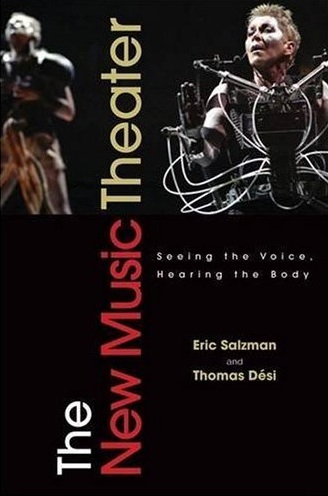
Went to The Cell Theater in New York tonight to see a panel discussion of the book on the left.  Eric Salzman also wrote Twentieth Century Music, which many of us read as children, and this latest is coauthored by Thomas Desi, whom I met at NewOp, I think in Amsterdam, which is how I met Eric as well.  Eric and Thomas are both talented composers and impresarios, and the book looks great. It's waiting for a read after The Piano Teacher. Afterwards, dinner with the two authors and Grethe Holby, who danced in Einstein and started American Opera Projects.  Eric doesn't like using "opera" or "chamber opera" for what we all do, as he thinks it carries too much baggage and too much of a connection to the opera singer voice of the 19th century. "Music Theater" is his preferred term, although I think that term is usually confused with American Musical Theater, and I kind of like taking back the Opera word. It sounds highfaluting and pompous but it's all meaningless to the person on the street anyway.


Tuesday, December 9, 2008

Polish Anti-Nazi Art


I had a lovely visit with my Art History Teacher Aimée Brown Price, whom I hadn't seen in a dog's age, today and noticed some Polish and Polish-Soviet War and Nazi Resistance art sitting about. Created soon after the war, they show a somewhat romanticized view of the Soviet involvement in the liberation.


Too Big

My fellow new music blogger Kyle Gann recently wrote a discussion of a discussion of the Nazis and the Republican Party, but the truth is you can't really compare anything to the Nazis. They are just too big. As Godwin's Law implies, they are the super-ultra-end of all comparisons, off the charts. Hollywood and the Video Gaming industries have always plucked them out of the bag when they need some Unrepentant Evil that requires no character development, no softness, no compassion, no other side to the argument that is their malevolence incarnate. I remember reading that Kubrick always wanted to make a film on the Holocaust but decided that it could never be done, that Schindler's List isn't really about the Holocaust, it's actually about the opposite of the Holocaust, hope in the face of hopelessness, but the reality of the Holocaust is really the all-encompassing horror of horror and hopelessness without end, with no escape, an abyss and a void, even the concerted disremembering of its own existence in the fall of the Reich. Even The Producers, which so wonderfully skewers the Prussians, doesn't mention the Shoah; its inconceivable savagery would overwhelm. The Fox News-ites who paint Obama as a Messianic Charismatic Hitlerian figure who will lead us into a Götterdämmerung are simply idiotic, simply haven't read their histories. There is no way to again be as big as he was, as big as they were.

Cold Comfort

I'm having sex in Ron Kuivila's bed, guest bed that is, with one of the other guests here in the house he shares with Bobbi and their young 'un in Middle Haddam, just north of Lower Haddam in the 'fucking Xmas card' that is Connecticut of the Holiday Season.  Ron and I have some connections going way back, having both appeared on Tellus cassettes back in the day (I particularly liked Canon X), and Ron and David Anderson collaborating on the design of FORMULA, a FORth-based Music LAnguage which I've very surprised didn't have broader uptake. It was amazingly well-designed, with a highly-threaded process-based model that seemed remarkably suited for music.  My late and amazingly talented composer buddy Jim Horton used it exclusively near the end, when his arthritis got so bad and his hands so crabbed and swollen that he could only peck at the keyboard, but through the tidy naming of a few very simple processes, could generate huge masses of sound. Dave was a professor at UC Berkeley when I was a grad student there and later was the ex-boyfriend of my now girlfriend: a plaything of We who struggle in the Incestuous Appalachia that is the Life in New Music.

It's so wonderful to be here, to talk about Music and Art with someone who knows more about it than me.  I don't get that much in SF these days.  I need to come back soon to the Methodist-sanctified ground here in the shadow of Wesleyan University.

Monday, December 8, 2008

Die Aktphotographie

I've always been fascinated by the utterly insane and so, toward that end, I present a feast of Scientific Racism, the perfectly sculpted Aryan Master Race Corpus:

Aryan nude

and let's not forget Leni, who tried so hard later in life to find absolution for her early sins, namely and once again, the perfectly sculpted Aryan Athletes in their many and womanly almost-nakedness, putting the shot and throwing the javelin and in general prancing about:


Hey, it's funny


"For the amoral herd that fears boredom above all else, everything becomes entertainment.  Sex and sport, politics and the arts are transformed into entertainment. Even religion will have to become show business if it is to survive. Nothing is immune from the demand that boredom be relieved (but without personal involvement, for mass society is a spectator society). If television does not yet exist in this society, it will have to be invented."

Saturday, November 22, 2008

the rights...

Several times in my life I've been tempted to set a pre-existing bit of lit, something that somehow inspired me language-wise or otherwise. And, in fact, I have from time to time succumbed to this temptation, the whisk of the devil's tail against my ass, and have paid a price for it, a sin confessed through the grill whilst the priest daydreams of beddable young 'uns spurting out wet, white and jam-like decades of the rosary laying recumbent upon the altar.

But let me give the reader a bit of advice. When the itch comes upon you to adapt, first, step into the kitchen, put the kettle on the boil, traipse out into the garden and pick a bit of fresh mint, pack it into a clear glass teapot, pour the water hot over the aromatic plant, pick the pot up and then smash the whole thing hard against your face. And the point of this exercise is to allow you, the reader, to experience a scale model of a simulacrum of the pain that will ensue if you are foolhardy enough to follow this path, a scarring burning pain that never never never ends.

I'm feeling this pain once again as I'm trying to assemble a DVD box set of my operatic legacy (titled Erling, a life in Opera) and once again the pain is beginning to throb deep behind the eyes. Once again I'm on the phone and the email and the written letters with the lawyers, the agents, the holders of rights, the representatives, the money changers and all their ilk, and the wretched torture rises again.

When I first read queer, Burroughs was quite alive and, as I thought of writing an opera based on the novel, I figgered I would just write him and ask him if I could do it, auteur to auteur, assuring myself that he would put his arms around me in a fatherly way and tell me sure, go ahead, I'd like that. But then, like a number of my erstwhile partners, he went and died on me, leaving me in the hands of his estate, a cold institution not so fatherly, unless we consider fatherliness to be the quality of the absent father, the dad that doesn't take you fishing and isn't there for you and turns his back when you say I love you.  I had contacted Burroughs's longtime secretary, James Grauerholz, who was into the project, but the institution and its lawyers were not satisfied.  I wrote many letters and many many emails, pissing into the wind, and the months and years went by and time was running out. The theater calendar had been set, the costumes were on the drawing board, the greasepaint was already being poured into the troughs and I was considering going forward guerilla style when, one day, I mentioned to my colibrettist John Morace that the latest roadblock was that the lawyers had informed me Steve Buscemi had optioned the rights to queer for a movie and all was in limbo while he scared up money for it.  Upon which, John picked up his phone, dialed the number of Steve's brother from memory, and all was taken care of.  As it turned out, John and the brother had been friends since childhood and once the outer defenses of the celebrity fortress had been penetrated, well, Mr Buscemi could give a shit about some small-time chamber opera writer infringing on his option. I rapturously forked over a $1000 to keep the lawyers sunny and all was then right with the world.

But, every time I think how lovely it would be to resurrect the piece, to see Trauma act it again, to put out a DVD, to do any more than think about it, I realize I have to face this all again.  The Buscemi version seems to have never materialized and who knows who has their hands on it now. 

A Little Girl Dreams of Taking the Veil I ran across at Cody's on the remainder table in the early 80s, playing with it for a decade before taking the plunge and setting the whole thing. As this was before the experiences with queer above, I was even more the naif. Permissions were an ephemeral notion that turned solid enough when I ran headlong into them. Unraveling the tentacles of the octopus that is the rightsholder to the Ernst artworks was a process that took over six years from start to finish. The English translation was by Ernst's wife, Dorothea Tanning, pictured above, born 1910 but who was and is still alive and writing and painting. I tracked her down and received permission, I thought, for everything, but the underlying untranslated text was still held by the Artists' Rights Society in New York City, and the images by ADAGP France, facts that took years of investigation.  Like all good rights societies, they slice and dice Ernst's holdings into the smallest pieces possible, and my six years of effort and another $1000 led to the acquisition of the limited rights to print up 1000 copies of the opera CD and perform the piece three times: San Francisco, Klagenfurt, Brühl. Again, happiness at the end of a long road.

But, once again, every time I dream of reviving the piece, of hearing the music come to life, of finishing the DVD, the familiar weight comes upon me and drags me down into the mud, where I struggle in vain, lungs filling with muck.

Sunday, November 16, 2008

The secret of success in New Music


Lou Harrison's Music Primer was one of many very influential and important books in my musical development.  At the time I read it, I was rediscovering a certain melodic simplicity in my own work. His ideas shaped some of mine, but I was especially taken with one particular passage, somewhat outside of the world of music composition per se, but dealing with that which is most important to a career in the arts, namely that a pure career in the arts is an essential impossibility:


If you really have to be a composer and are attractive and uninhibited, then try and get yourself “kept” – whether by woman or man.  This might be easier than undertaking a whole second career in order to be able to afford composing, and you might get a little restorative affection as well.


Unfortunately, I was stupid enough, and probably too inhibited at the time - my late teens, not to follow his advice, to try to make a go of the 'second career' path, to give up sleep, and not to take the high road: to flatback and think of England, to become a good wife, flipping my hair and asking on my knees for a bit more pin money from my loving husband.


But later in life I did figure out that the judicious - or injudicious - placement of my unit in a number of compromising positions could in fact be helpful to the bit of musical career that I eked out on the side.  In the late-mid 80s I started working with choreographer and dancer Miss W_ on an extended series of pieces. The first and maybe the best was Crash, an hallucination on the already hallucinatory J.G. Ballard novel.  My pal Henry Kaiser had recently purchased a Synclavier and a few of the local classical avant types were thrusting their bowls in his face and asking for a bit of the corn gruel drippings off its gleaming steel and black plastic but I had a key, haha!, since Hank and I were working on Secrets and Mysteries (aka Secrets of the Unknown) with Edward Mulhare, using the early sampler to write as much music as quickly as possible. I stole into his beautiful little studio and worked all night every night coaxing as many floating microtonal lushnesses as I could for Crash and Hagalaz and the others. And why, may one inquire, would I work my little ears to the ossicles to find the perfect romantic musical moment, the perfect twist of pitch ratios adding a glint of a knife to a pretty harmony? Because I was in love. And, when Miss W_ came to hear it for the first time, sitting in the dark of the studio late at night, the fullness of my gift fell upon her, parting her lips, spreading her legs ever so slightly. Later, at a restaurant far away, she looked into my eyes and told me of her most favored venereal pleasure, something so near and dear to my heart that my pulse quickened at the thought, and I flipped through a number of scenarios and possibly near-term advantages and pleasures, but, like everyone else who desires and desires so strongly, I hadn't quite thought through the rest of the story: the pain, the recriminations, the crying and the destruction and the loss, but, before that all came to pass, we spent ourselves through a burst of creativity that produced some of my still favorite works, and some of my still favorite memories: risky sweaty writhings under soft sheets, towels put down to catch the blood; hot tubs overfilled of naked lissome dancers, their supple fingers probing under the foaming jets; furtive quasi-couplings in cars, backstage before a performance, in the corner of a darkened gay bar; sweet shared conspiracies.


And at one of our performances at the Lab in San Francisco was a young choreographer named Robert Wechsler, just beginning to develop a new language of sinuous dances based on groups, canons and symmetries, where the dancers moved quickly through each other in seemingly impossible ways, who took a liking to me (and I'm sure Miss W_), and he kept in touch, asking me from time to time to contribute short soundtracks to dances, e.g. Modules and Loops. Not long after, Robert developed some financial complexities in the US, and moved to Nürnberg to allow things to cool. By the mid 90s I had forgotten all the lessons learned with Miss W_ and was embarking on another long walk off a short pier with Ms. A_. Once again, I enjoyed a burst of creativity, my pen pouring out one inspired score after another, intending to woo and succeeding again beyond my expectations and beyond my ability to deal with it. Once again, I found myself pressed against a lithe body, this time straddling me, allowing my hands to wander over her prepubescently boyish frame, a suggestion of immodest nature whispered to me, hot breath on my ear, kisses on my face. Once again, I was caught up in clandestine plans, this time of a global nature, a vast intrigue tapping into a worldwide network of co-conspirators. I accepted an offer from Robert to come to Europe to work with his company, Palindrome, on an evening of dance and music using a set of interactive technologies: a MIDI controlled pipe organ, dancer-tracking software, heartbeat monitors, the very new and pre-browser Internet. And surprise, it so happened that Ms. A_ was working on a project in Prague, a short train ride away, and so came to visit, pleasantly insinuating herself in the company and, after I left, performing on tour with them through Austria.


While performing with Palindrome in Klagenfurt in the south of the Austrian republic, Ms. A_ left a tape with the theater of my first chamber opera, A Little Girl Dreams of Taking the Veil. Although they didn't care much for the production, a reflection I believe on the cultural divide between the Old and New World, they found themselves drawn back to the music a number of years later and asked me if would be willing to have them perform it and, if possible, to develop a version in German. Although, by the time this came about, my life had plummeted into chaos and into an even more complex sexual by-now-quadrangle including another Ms. A_, a young woman of great vigor and blondness who evinced in me a before unknown tendency for obsessive stalking behavior, one of the high points of my life came while descending into the Klagenfurt airport, a Tyrolean Air flight attendant in an absurdly sexy dirndl leaning over me, noticing a photograph of a woman's mouth covered in blood in the newspaper of the passenger in front of me, seeing my name in the caption of that gory image, landing a few moments later and being greeted as Maestro by the theater director, sweeping me into the dress rehearsal and a magical otherworld, jetlagged and fagged and fashed. The first Ms. A_, who was again performing in the Easter bloc, once again came to meet me, but this scene quickly descended into the by now familiar recrimination, tears, anger, drama and worse and worse. As Ali Tabatabai once told me, we theater folk know not where the stage ends. But, just possibly, do the means justify the terrible endings?  


And this now reminds me: a dream-like trip to Amsterdam with a friend to live out one of her fantasies: that of having two young Dutch boys simultaneously. We tripped and traipsed and shagged our way through the red-light district looking for connections to these ultimate striplings, the perfect combination of enthusiasm and ability and fresh-faced boyishness. In one of these fact-finding encounters of flat-backing fieldwork, the two of us were huffing and puffing and panting over a quite amazingly beautiful and busty Dutch fille de joie who, hearing of our desires, gave us her mobile number and invited her to her wedding in Rotterdam the next week, assuring us that her soon-to-be husband and one of his friends would without doubt fill the bill and that having some other artistic & libertine types there would surely be of benefit to all.


And so, after Klagenfurt and the collapse of the entire quadrangle in flaming death, and as a period of even more intense sluttiness and my relationship with Lynne "die Zweite" began, the Max Ernst museum in Brühl and I planned to have the Little Girl opera performed as part of the dedication of an Ernst sculpture, newly installed. I showed up in town with my freshly blue hair, gathering some curious stares from the locals, overseeing the installation of an outdoor stage for the production, the arrival of the ensemble and all the rest. Also, at this time, Sub Pontio Pilato, also recently translated into German, was heading for its quirky premiere in Austria where a certain Miss B_ was starring, who wanted to come up to Brühl to meet me and see something of what I do. I was feeling my oats, as virility comes with success, and something happened which my gentlemanly upbringing does not allow me to divulge. Even though, with some familiarity, this led to some drama back home with the Empress, Miss B_ and I cemented a personal and artistic connection so that, after the Pilate premiere, she went back to St. Gallen and played the Credo from the opera for the musical director at the Abbey. After an Austrian review of Pilate claimed that the Credo must have come from a pre-existing Mass, I wanted to create such a thing: a crucifix of pieces overlaid, a pre-existing piece from an alternate youth, a time of innocence and faith, before the devil grabbed hold of my soul and I made that Faustian bargain, taking the path of sin, the path of success.


Monday, October 20, 2008

On the Sanctity of Stage Directions


Finally picked up the latest issue of Opera America's rag and betwixt its covers are the usual snaps of Grand Opera productions featuring Giulio Cesare's Divine Julius (as in Gaius Ceasar) in a vaguely fascistic 20th century uniform or Wagner's Das Liebesverbot in a 50s disco setting.  The cover displays a Tales of Hoffman which seems to include robots of a breed I believe unknown in Offenbach's time as well as a white-lab-coat-frocked doctor with steampunk gizmos on his head.  I was drawn back to a jet-lagged endurance-fest in some sunken Dutch city trying to make heads or tails of a Peter Sellars "contemporary staging" of a Rake's Progress which seemed to have been rethunk as a anti-prison-industry diatribe. And there is my friend of a friend Roy Rallo too (although I do have to say I loved the bit in his Finta Giardiniera where, in one of those comedies of misidentification so belovéd of our artistic forebears, the lady who has just mistakenly given a blow job to the wrong fellow in some sort of 70s high-school auditorium or something rises as the lights come on, fades away and draws the back of her hand across her check in a lovely post-head gesture.)

Yes, I know, I know, in our remix culture® we all love the vegematic mish-mosh and hotch-potch of low and high and black and white where blending usurps creating and simple-minded novelty wrests the crown of achievement from laborious toil.  And I accept all that.  I myself have manipulated, slowed down, processed and otherwise pissed on pieces of high art and then called them my own. But why, beseechest me of thou, is it OK to totally ignore the stage directions of the opera libretto, the settings and characters and motions and decor that provide some context for the piece, but it is somehow not OK to touch the music or the words? Why don't these postpostmodern reimaginings apply themselves to the notes and rhythms and other composerist bits as well? Well, we know why: stage directions are second-class citizens, not at the level of the real art.

We see the same abominations in the non-music-theater world as well. The fact that the following anonymously authored entry is considered a point even deserving of empathy is somewhat shocking to me:

Since Beckett's death, all rights for performance of his plays are handled by the Beckett estate, currently managed by Edward Beckett, the author's nephew. The estate has a controversial reputation for maintaining firm control over how Beckett's plays are performed and does not grant licences to productions that do not strictly adhere to the writer's stage directions. (from Wikipedia)

Would there be such gumption if the evil estate made vain protestations against those productions that ignored all the other words appearing on the page?  I mean, sure, do what thou wilt shall be the whole of the law, so go ahead: blend, chop and liquefy it all, but why, after one is done changing all the author's words that just happen not to be actually spoken, do you, yes you, the one with bloody hands churning the grinder handle demand that the poor and probably dead author's name be kept on the marquee?  

When the director of my own opera Mordake worked with the libretto - a beautiful object written by the young, gifted & macabre Douglas Kearney - the sung words were changed hardly a bit and only after careful consultation with the writer, whereas the stage directions were ignored from the get-go, and my mild remonstrations in favor of at least considering their value were met with an awkward silence, some quiet coughs, knowing glances in the direction of the cast member and then quietly ignored.

So, the libretto for St Cecilia, the new twinkle in my eye, is being written only as stage directions, no dialog at all, no escape from the handcuffs for the poor director assigned to the task. I'm doing this out of a certain cantankerousness of course, but goddamn it my rage must be assuaged; and I pray that the wails of anguish that rise from the theater soothe the now-avenged souls of the dramatists so cruelly wronged.

Thursday, October 16, 2008

Jolie Holland!

Saw my old friend Jolie at Bimbo's tonight.  Over the many years I've seen her perform, from the olden days at the Rite Spot to her vaunted entry into the seraphic heights crowned with the pop music diadem, it was the best of them all.