Wednesday, April 30, 2008

Dying in the Saddle

from the wikipedia article on Louis Vierne:

Vierne suffered a heart attack while giving his 1750th organ recital at Notre-Dame de Paris on the evening of June 2, 1937. He had completed the main concert, which members of the audience said showed him at his full powers - "as well as he has ever played." After the main concert, the closing section was to be two improvisations on submitted themes. He read the first theme in Braille, then selected the stops he would use for the improvisation. He suddenly leaned forward, clutching his chest, and fell off the bench as he hit the low "E" pedal of the organ. He lost consciousness as the single note echoed throughout the church. He had thus fulfilled his oft-stated lifelong dream - to die at the console of the great organ of Notre-Dame.

I've fantasized about two modes of death: one rather like the above, but peacefully in my sleep, the completed but not-yet-fully orchestrated manuscript of my own Requiem Mass slowly spilling off my night table; the other more akin to the death of Nelson Rockefeller.  

Sunday, April 27, 2008

Mordake Visuals, Construction, Music et al

routeI was informed by electronic post late last night that Lynne has been blogging her work for Mordake. As of yesterday morning I finally finished setting the last of Douglas's text, almost just barely too late as we really are in the middle of rehearsals, and Herr Weiß is here only for another week or so, and M. Duykers is back in Florida performing final excruciations on his students. Several would-be assistants had other projects interfere with their participation, but luckily our friend Diana showed up direct from Amersfoort NL, firmly gripped the handle of our construction problems, caused the Jack in the Box to pop out, and has left us all deeply satisfied with her work. 

Mary Ellen Hunt dropped by to interview Frieder and me for a mention in the Chronicle's article about the SFIAF, but we've been corresponding a bit about those people who, like Mordake are double-faced.  She referenced the young Indian girl who is believed by some to be a reincarnation of Ganesh, I countered with Chang Tzu Ping (with a nod to the recent alleged Lakshmi reincarnation), and then on to various other facial tumors and skin ailments and so on. These photos disturb me a bit even though I wish I could just accept them as part of the continuum of human styles and substances.  Like the murder victim we happened across today draped with a cloth and surrounded by police tape and squad cars, they seem to remind me too much of my own fragile physical nature, one step away from worm dirt.

Tune of the day

Angus Dei

Thursday, April 17, 2008

3½/4

As a milksop, I've been reticent to specify the true nature of some rhythms I use commonly, so I'd like to say here for those of you listening that when the pulse is basically quarters (say) and I write a time signature of 7/8 (say), what I really mean is 3½/4 or 3/4 + 1/8 or 3.5/4.  I've tried to explain this to a number of conductors in the past but they've scowled at me and tossed their hair and brushed me aside and explained that this is simply not possible, that they can't have a dangling ½ a beat andthen  proceed to conduct it as 2 2 3, which really is not the same, now is it? I mean, it's *really* goddang not the same! So why do I allow it? Well, see the definition of namby-pamby in your well-thumbed English-English dictionary.  

Looking back, I was clearly infected with such jumpy skittery rhythms by their common usage in the pop music of my youth, e.g., Led Zeppelin's Ocean, which features an ostinato alternating between 4/4 and 3½/4. My high school was a hotbed of wannabe progressive rock musicians and often featured such at the oral-sex-and-alcohol-fueled parties which I would have attended except for my aforementioned milksopish milquetoastishness, but sometimes, leaving the SQ-encoded recording of Petrushka playing on my quad hifi, I would sneak outside in my bunny footed yellow pajamas to peek in through the window, to hear them playing excerpts from such devil-besotted music, their long locks swaying to the beat, sweat dripping down their bare chests, a slide show of one of them dressed in their SCA finery projected on the walls while their girlfriends (ah, girlfriends!) waited for it all to stop so they could put on their singer-songwriter LPs and make out with their BFs, lost in a romantic fantasy, fingers and lips searching and probing the limits of their young love.

Tuesday, April 15, 2008

Ode to the Shy Monk

Review of the Missa came out today in the St. Gallen Tagblatt.  Google's automatic translator produces this, which is a bit poetic, viz "Major outbreaks searches in vain."  Listening to the recording from Sunday in the clear but jet-lagged light of day today, which I've put up here, I realize that they did do a beautiful job.  


Worlds in Collision


Was reading my copy of IEEE Spectrum this morning at 5 am and found a description of my friend Frieder's work. Very beautiful.  Looking forward to working with him again in just a few days.

Sunday, April 13, 2008

Rhythms, Bells, St Gallus and the Bear

After four years hanging over my head, the Mass finally premiered last night, and hanging over my head was the above: St Gallus in the company of the bear with whom he traded sandwiches for firewood, and, to continue this trope past the point of enjoyment, I woke up hung over after the free-flowing alcohol-laced VIP reception, where, just like Scrappy and his friend, we decided in our stupor to ring the doorbells and wake up the bishop but succeeded in waking only his sister as he was out "on assignment." Thank God for Europe where they still seem to sell out houses - and a mighty big House o' God in this case - for brand spanking new music and where they seem to applaud and applaud and applaud to the point of embarrassment (although this discomfort is one with which my vanitas can well live). Kim Brockman was the soloist and stole the show with her effortless navigation of the 23rd Psalm which, I have to say, is really just more or less in a simple 3/4, but the accompaniment tends to confuse. 

Speaking of confusion, even though over in Kyle Gann's heaven of stratospheric beauty, present concerns are partial tuplets and non-power-of-two-denominator time signatures, down here wallowing in the mud of the temporal world, I would be just a little bit happier in my insignificant existence if I could be assured of accurate non-partial tuplets and power-of-two-denominator time signatures and reliable groupings of 8ths and 16ths at moderate tempi that don't quite hit the downbeats. But the performance was lovely, and the circle of communication from composer to performer to audience and back again was closed very nicely, and I was overjoyed just to experience it all in such an over-the-top goopy-rococo environment. 

The performance was in the choir - which you can see here - using one of the two mechanically connected baroque organs. The stiff action necessitated a simplification of the faster parts of the Credo. I wrote a quick Postlude as a bit of espresso or maybe dolce to wake up the audience after a long period of contemplation of our insignificance and the certain oncoming freight train of death, etc, but it turned out that even my delightful insouciance was a bit beyond the very limited rehearsal time for Willibald, so we had to cut the (as I call it) Terry Riley section, that with one meter for each limb (although really two are in the right hand and one is split between the feet), but as to the remainder, as Duncan put it, Willibald hit it.

The best part of performing in the Dom Kathedral is that, every fifteen minutes, there is a small but very clear bell part added to the piece, almost always in just the perfect place, so much better than the added ambulance sirens of my mostly urban performances, and in fact I herewith formally add the instruction to the score: play a clock chime or two or maybe even a few more every fifteen minutes starting at a random time offset (well, actually at five minutes before the quarter hour marks as we need to give the brothers time to dust off the knees of their robes and get themselves to tend the radish garden or whatever) and please don't be stopped by the fact that the soprano is just now putting herself in the proper mood for her emotive solo or the fact that the music is really really really quiet, OK?

(photo by Lynne)

Friday, April 11, 2008

Me in a funny hat

How I am perceived by the Swiss press.

Wednesday, April 9, 2008

Lake Como

Looking over Lake Como from our room at the Bellavista in Valmedrera at the town of Lecco in the distance, where my filmmaker friend Ilaria lives. Lynne says the bell tower is typical Lombardy.  Bellagio, the real one, is just north of here, famous in my circles for the Rockefeller study center. Ron Kuivila told us that his residency there consisted of one unbroken cocktail hour. The hoteliers speak Western Lombard, not sure which dialect.

Tomorrow we take the trip over the alps in the opposite direction of Hannibal, sans war elephants, but with pillaging, conquest and victory on my mind at least, into the land of Schweizerdeutsch.

Monday, April 7, 2008

Ruth's Kosher Vegetarian Restaurant

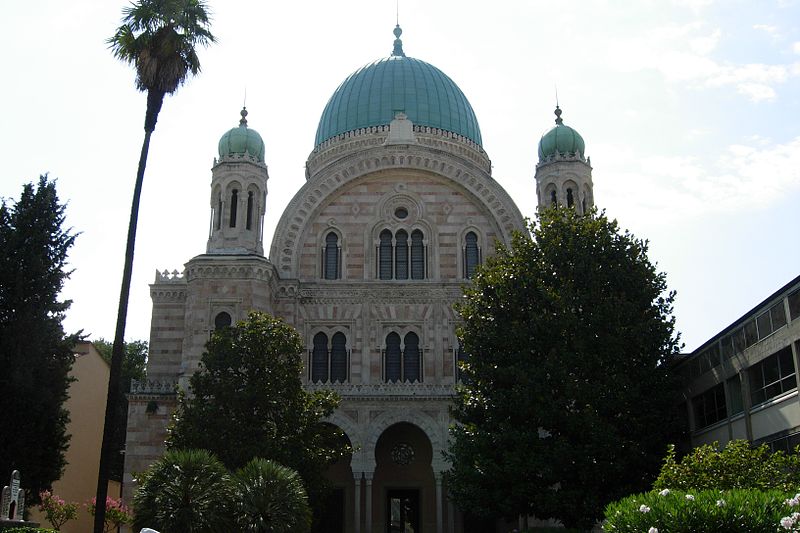
Image:Synagogue di Firenze.jpg
We had several great meals in Florence. First was a traditional Bistecca alla Fiorentina and the second was just around the corner from the synagogue (above) at Ruth's Kosher Vegetarian Restaurant.  The former because of the enormity both in mass and taste and the second because the owner regaled us with stories of his days in Prague in the bad old days of the Soviet repression: how he hung out with Vaclav Havel (he had a book of photos of the two of them and various other hippie types), about the Plastic People of the Universe (including where they all are now), about the Velvet Underground (and how the Velvet Revolution was named after them), about the importance of Frank Zappa to their culture, about how they carried copies of the White Album with a label peeled off a Smetana LP, and how the best Milos Forman film is Taking Off.  

Friday, April 4, 2008

More devils than birds in the sky

A great number of demons in the Vatican, some quite voluptuous, some rakish, some horrific, but all kinda appealing. While we all hope for an eternity spent in quiet contemplation of the Celestial Visage, the fires of Hell and the activities of its residents make a far more winsome subject for the visual arts.  

Luigi Dallapiccola

My son said yesterday that it would be expedient for me career-wise to spend a bit of time in prison, especially for a political crime. Maybe that's more likely currently, here in the land of Mussolini and Berlusconi than back in the sun soaked bliss of whatever San Francisco. In Roma my thoughts have turned to the various Italians I have known and loved: Nono and Berio and Dallapiccola. The budding latter young Luigi did spend some career enhancing time with his family in a camp for subversives in Graz, the hometown of our own favorite California National Socialist and Führer, but the connection today is a mention of myself in a discussion here on whether Dallapiccola may have wanted to have his music played in JI or some other non-equal tuning system. I felt compelled to correct a small error. A statement on the Minnesota Multiphasic Personality Inventory: I often need to correct others' mistakes, answer yes. JI and tuning history in general is still so misunderstood, and the recentness of the God-given nature of 12 equal so little known, that I do feel I need to say something from time to time just to rail against the darkness etc. Once again I feel the need to retune my life and music a bit.

Sunday, March 30, 2008

Desire Line

art5_08

Thom Blum had a beautiful installation at the Cowell Theater last night, comprising a long hallway, a collection of friends' ipods and an assortment of speakers donated by Boston Acoustics.  I've been hearing him talk about the piece as it developed, but it was far more striking and far more intense than I imagined.  Having experienced it, I don't know why he hasn't done installations like this before, because it so perfectly connects to his oeuvre. A number of his concrète pieces are travelogues: recordings made from captured sonic landscapes of far away places. Years ago he wanted to build a Walkman/iPod-like device that would process the sound around you and feed it into your earbuds.  The new work is a travelogue of sorts, a collaboration between Thom and one's perambulation through it, glimpses of sound and music past and present near and far, including a modified bit of The Comfort of Solitude from The Bed You Sleep In. Oh, let's listen for a moment to that old chestnut, shall we?


The hallway led to a performance of Deborah Slater's Desire Line, one of her best works, featuring a number of my favorite dancers and social-networking site friends: Kerry Mehling, Travis Rowland, Shaunna Vella; and based on the paintings of Alan Feltus (see example above).  Travis and Kerry dance as one person, both amazingly fluid and strong, with spectacular moves following in unanticipated succession.  And the all-important-and-possibly-my-reason-for-being-in-the-arts cast party was a religious ecstasy of salmon and flan incroiable and broken glass and Absolut and lithe inked flesh in 104° water. Some parts of it seem to be missing after the fifth tumbler but even though Lynne had to leave early, driving off in her rented Mercedes, I'm relatively sure I was nothing if not the perfect gentleman in the aftermath.

Tuesday, March 18, 2008

When and Where


Missa Beati Notkeri Balbuli Sancti Galli Monachi

Samstag, 12. April 2008
19.15 Uhr
Kathedrale St. Gallen

Sonntag, 13. April 2008
17.00 Uhr
Kath. Pfarrkirche Jona

Sunday, March 9, 2008

Poultice o' my heart

Concert of the SFCCO last night playing Mordake Suite Number 2, the darker one. Edward Mordake hisself was there to see it, as he enjoys a variety of methods of instantiation, in this case in Jennybird's doll form. Here's a recording of it hot off the press:


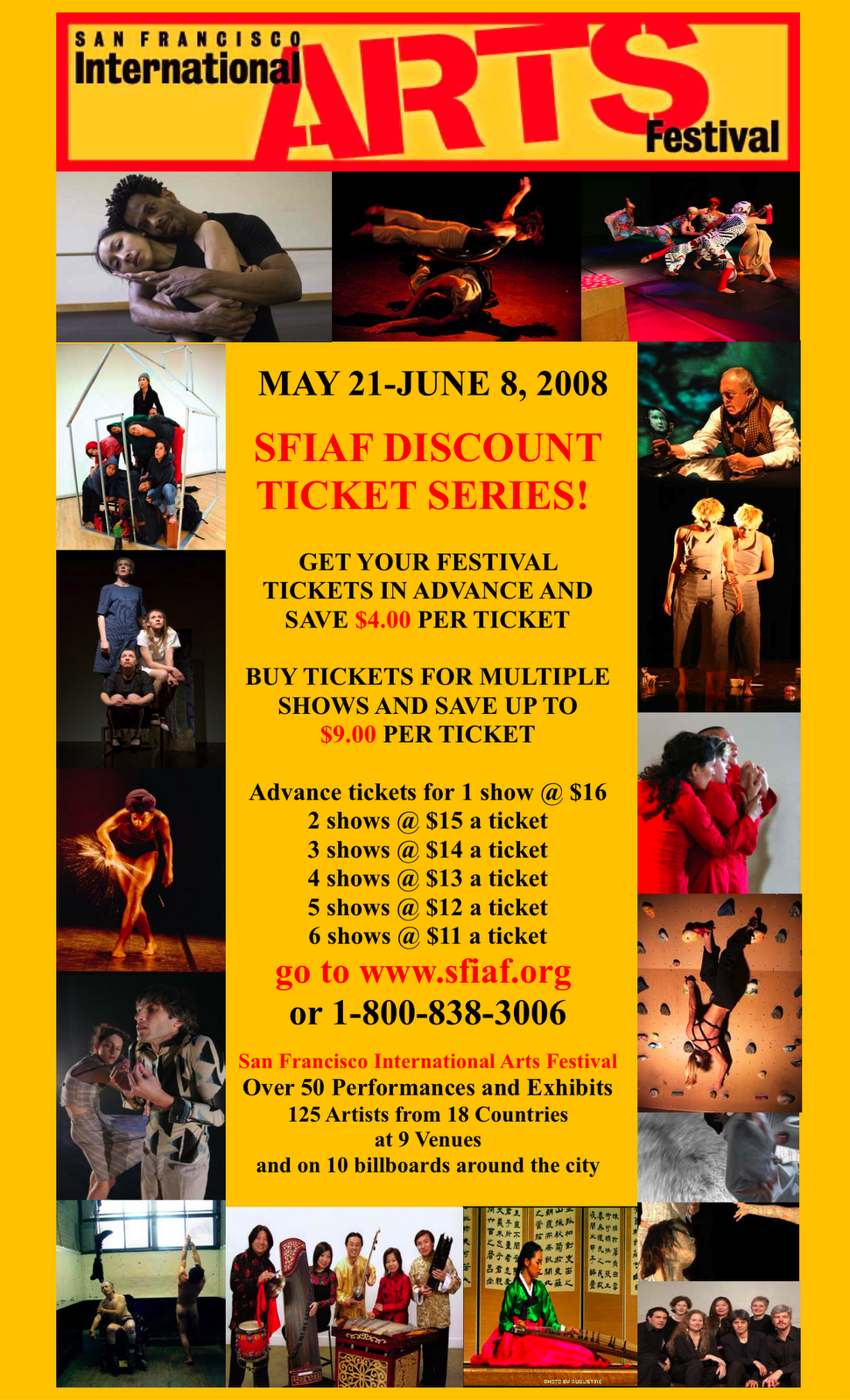
Also, the San Francisco International Arts Festival 2008 site went live today. The direct link to tickets for the Mordake premiere is here and I've been told there is a significant early bird discount.

Monday, March 3, 2008

Meditation on Jon

Composing music is a strange ephemeral artform, constructing something from the almost nothingness of sound, pressure-wave vibrations of the air.  But this strange ephemera is somehow able to touch deep inside the listener, bringing up emotions and reactions pleasant and unpleasant but impossible to ignore. In the films of the Hollywood mainstream, the emotional power of music and its ability to pass by the viewer's defenses is often used to manipulate, to subliminally broadcast to the listener how they are supposed to feel. But music in Jon's films is different. Although it carries a large part of the emotional weight of his films, it is not a hidden wedge into the viewer's heart.  In fact, it is usually banished from those scenes which are the most directly narrative and kept to those long minimal moments of repose that are so dear to Jon.  It is given an equal billing, with narrative, with the landscape, with the characters, part of a set of parallel threads that each relate to the viewer a different aspect of the story.


I first met Jon at a screening of All the Vermeers in New York at the Pacific Film Archive in Berkeley California. The producer, Henry Rosenthal, whom I had known through the Just Intonation Network years before, called me and told me I had to come, that it had been a labor of love and that he was quite proud of it. When I saw it, I was enraptured.  I loved the look of it, the pace of it, the feel of it, and especially the music by Jon English.  It was such a musical film, both indirectly, with a feel for rhythms on the short and long and architectural scale and directly, leaving space for musical development that Jon English filled so beautifully, especially in the long tracking shot dancing among the columns of the lobby of some Wall Street location.  


A few years later, as Jon Jost's Sure Fire needed to be finished for its debut at Sundance, Henry called me while I was staying in a room in a businessman's hotel in Japan that was the size of a smallish shoebox and told me that Jon English was too ill to finish the music, in fact that he had written only a short melody for pedal steel; that the music had to be done in a couple of weeks; that it needed to be in a country style and that it also had to be in just intonation.  I jumped at the opportunity.  When I returned from Japan, I got a videotape of the film in its almost-finished state and wrote the music very quickly, sketching out a primarily synthesized score, starting from the melody that Jon English had written, and bringing in his pedal steel player to improvise with me. There were some brief meetings with Henry and Jon Jost, where they pointed at large problematic sections and told me to fix them, but mainly I was left alone to do what I wanted inside the constraints of no budget and no time. Jon did tell me there were some important numerological features of the film centering around the number 13, which I worked into various rhythms and various pitch ratios.


As Sure Fire was completed and as Jon and I spent more time together, we had an opportunity to work in a more relaxed fashion. He started to tell me of his plans for the next film, The Bed You Sleep In.  Jon had written bits of a script and said that he wanted some music done before production so that he could play it for the actors while they were working.  He also told me one of his recurring ideas, that he had always wanted music that naturally came from the location sound, sometimes imperceptibly.  But he also wanted real music, not just sound, and I suggested a mixture of classical and folk and electronic instruments, and a mix of classical and popular styles.  

From the notes to the CD: 


During the production of the film, John Murphy, who was doing the location recording, took me into the sawmill featured in the film.  Walking through the mill was like listening to a great industrial/futurist composition, the sound wonderfully dense and richly spatialized.  The sounds and smells of the local mills, especially the Georgia Pacific plant, were present throughout the town of Toledo.  The sound of the GP plant was audible in all the location recordings, whether inside or out.  The plant sat at the side of a tremendous chemical lake, a dirty brown pool with fountains spraying noxious liquid in large plumes up from the surface.  Its presence so overwhelmed me that, at one point, I had decided to do all the music using the sounds of the mill and the GP plant.  In the end, I used a variety of sound sources.  Some of the music, notably that which frames the letter scene, is generated almost entirely from sampled and processed recordings of the mill made by John Murphy during the production.  Some of these samples are used as instruments in other pieces and are mixed with the acoustic instrumental ensemble. [...]


After the production, Jon and Mark Redpath started editing and I began to see the film that didn't exist in the screenplay.  There were many long, static shots where Jon wanted the music to firmly imprint the film's bleak emotional state.  There was an extensive use of split screens.  There were a number of musical dichotomies I intended to be analogues of this, but the most successful [were in two scenes].  The first was a spare statement, where a single tone split into two diverging tones.  In the second, where the screen collapses in on itself, a similar divergence occurred in a rich instrumental texture, causing the harmonies to quaver and shift in a continuous manner.  


I went with Jon and Henry to the premiere of The Bed You Sleep In at the Berlin film festival where, unfortunately, Jon and Henry had a falling out over disagreements about control and ownership of the films they had done together. By the time Frame Up was completed, for which Jon English wrote the music and I did some sound work, the two of them were completely separated.  But, in late 1994, Jon asked me to come to Vienna to begin work on Albrechts Flügel, a film about a second violinist in the Wiener Symphoniker, a person who, like so many of us, comes close to greatness, almost achieving it, but who is painfully aware that they will never succeed.  It is so sad to me that this movie never came to fruition.  The music was to have been an integral part of the film, part of the narrative and a lens through which the characters saw the world.  Jon and I talked many times about the music and the ideas in the film.  I worked with one of the actors, an amateur violinist, and I started to work on some music, including what became the Albrechts Flügel suite of piano pieces.  This, I thought, would be the next step in our artistic relationship, a close partnership from the beginning of the film, hinted at in Bed, but taken even further.  But the film fell apart when Jon discovered some irregularities in the handling of the financing for the film.  I was never clear exactly what happened, but he left Austria and settled in Rome, where he finished Uno a me, uno a te e uno a Raffaele.  


Soon after, Jon turned away from narrative films, playing with the flexibility and affordability of cheap digital cinema, first with Nas Correntes de Luz da Ria Formosa, a beautiful meditation on a fishing village in Portugal, and later London Brief.  I worked with Jon on the latter film, but only from a distance.  I wrote a number of pieces, all electronic works, based on what I saw in his early drafts. I gave him a free hand in using those excerpts, placing them where he wanted, cutting and adjusting them.  I know he liked the intimacy and control of the new medium, that he could sit and work and recut and change everything at his computer by himself without having to worry about cutting room rental costs, sound engineers, and so on.  I think, in his heart, Jon wishes he could do it all himself.  He wrote the music for some of his early films and has a strong musical sensibility and, finally, is a person with a strong overall vision.


Since that time, I have contributed music for a couple of his films after his return to narrative filmmaking: Homecoming and La Lunga Ombra. I'm sure that, sooner or later and his recent cancer scare notwithstanding, I'll do more.  But because of our separation - Jon is in Korea these days - and the lack of money available for Jon's work and therefore for my time, there hasn't been quite the same level of connection as when we did Bed and Sure Fire, when we used to play table tennis together (Jon and I are both very competitive) and talk in detail about the films and how the music should act in them.  Maybe it can happen again.  I hope it does.


photo by mica scalin

Sunday, March 2, 2008

Ilaria, director

My friend Ilaria has been on my mind because she asked me to write a meditation on Jon Jost and our work over the years.  Also, we'll probably be seeing her in Milan next month on the way to Sankt Gallen.  She used The Whistling Note from I Weep (as well as a few other tunes of mine) in a film of hers titled il volo.  Here's an excerpt.  

Thursday, February 28, 2008

Mordake Suite Number Two

Dearest friends, folks and loved ones,

I know you are waiting with bated breath, on the edge of your seat, knuckles white in anticipation for the curtains to rise, the lights to come up, the orchestra to begin, and the full throated roar of the singer to announce the premiere of the latest work from the pen of Der Wold but, please, hold, calm down, be patient; all your desires will be sated so very soon, but first, you must endure one more gol-durned Mordake pre-pre-preview concert. Once again, Mark Alburger takes up the baton and conducts the SFCCO in a suite from Mordake, although this time not the prettiest sections, but those parts most dark and most evil, a stain on the very heart of music itself, a stain that will not wash off no matter how much we scrub and scrub with the latest detergents, oxidizers and antimicrobial agents.


San Francisco Composers Chamber Orchestra
and Old First Concerts Present:
"MARCH MADNESS"
Saturday March 8, 2007 at 8 pm
Old First Concerts
1751 Sacramento Street/Van Ness, San Francisco, CA 94109
$15 General, $12 Seniors (65 and older), $12 Full Time Students

Tickets are available through the Old First Concerts Box Office at (415) 474-1608, online at oldfirstconcerts.org and at the door. For more information, please call
Old First Concerts box office or visit SFCCO at http://www.sfcco.org.

Lunacy. Spaciness. Taking 20 years to write a piece. Thinking that music will save the planet. Having a face in the back of one's head. Suicidal thoughts. Why do we do what we do? Because we can't do otherwise? One thing's for sure: it's a crazy world. So come celebrate the craziness with Alexis Alrich, Michael Cooke, Philip Freihofner, Dan Reiter, Martha Stoddard, Erling Wold, and the San Francisco Composers Chamber Orchestra as they present "March Madness"!

Michael Cooke's Sun & Moon is a dizzying take on time and place, with members of the orchestra performing spacilly and spatially at the point-and-click discretion of Music Director Mark Alburger. Martha Stoddard, as Guest Conductor, will take the ensemble even farther out in A Little Trip to Outer Space where reality has lost its bearings. The entire orchestra will evaporate in the clangor of metal as Philip Freihofner re-invents sanity in The Bell Field, while Dan Reiter's Toccata and Fugue will send minds reeling under the direction of Associate Conductor John Kendall Bailey toward a reckoning with Johann Sebastian Bach. Farthest afield on earth will be Alexis Alrich's Fragile Forests: II Cambodia, where East and West consciousnesses collide in the loveliest possible manner. And, as a final coup-de-grace Erling Wold will evoke the diabolical in Mordake Suite No. 2, in hint of his mad opera to be premiered later in the year.

Alexis Alrich Fragile Forests: II Cambodia
Michael Cooke Sun & Moon
Philip Freihofner The Bell Field
Lisa Prosek Chain Saw
Dan Reiter Toccata and Fugue
Martha Stoddard A Little Trip to Outer Space
Erling Wold Mordake Suite Number 2

Tuesday, February 26, 2008

Torture of the damned

Mother Jones published an interesting object, seen below.  It purports to be the music of the twist and the  screw: our tax dollars payed out for the most genteel of purposes. It reminded me of Gavin Bryars explanation for self-publishing, to keep control over his works so they wouldn't be performed in the then-pariah state of apartheid South Africa.  I can't imagine Rage Against the Machine - especially - being too happy about their inclusion on this list. Music, like any other form of torture, should be applied only to those who request it of you. Even though I, like most right-minded™ folks, believe that information wants to be free, I do think it is a somewhat naive misunderstanding of the value of author's rights, even moral rights, to think that it is all about BitTorrent-ing the latest episode of Project Runway. In fact, the greatest threat could be your government or the big bad corporations stealing your artistic handiwork to use for nefarious purposes, from the selling to unthinking consumers the means of their own destruction to the hired scourgers of our various Ministries of Justice, Peace and Defense using it to destroy some poor schmuck who happened to piss off the wrong tribal elder when the company fellows started doling out greenbacks for information. And I have some fear for my friend Frieder, whose performance previous to my opera this spring will be in Pakistan. Will his Pakistani visa's presence on his Old Europe passport land him a lengthy stay in a Navy brig, with cold iron manacles and cold iron door that even his most earnest magic cannot pass through, listening to the Barney Theme Song until he confesses to a host of misdeeds?

Saturday, February 23, 2008

Advice to young composers

if no orchestra will play your music, don't complain; start your own orchestra
if no one will review your music, don't complain; start your own journal
if no one will publish your music, don't complain; start your own publishing company
if no opera house will produce your music, don't complain; start your own opera house
if no one will fund your music, don't complain; fund your music yourself
if no one will publicize your music, don't complain; publicize your music yourself
if no one will buy your music, don't complain; buy your music yourself
if no one will listen to your music, don't complain; listen to your music yourself

Wednesday, February 6, 2008

Monday, February 4, 2008

Death as happiness, death as sadness

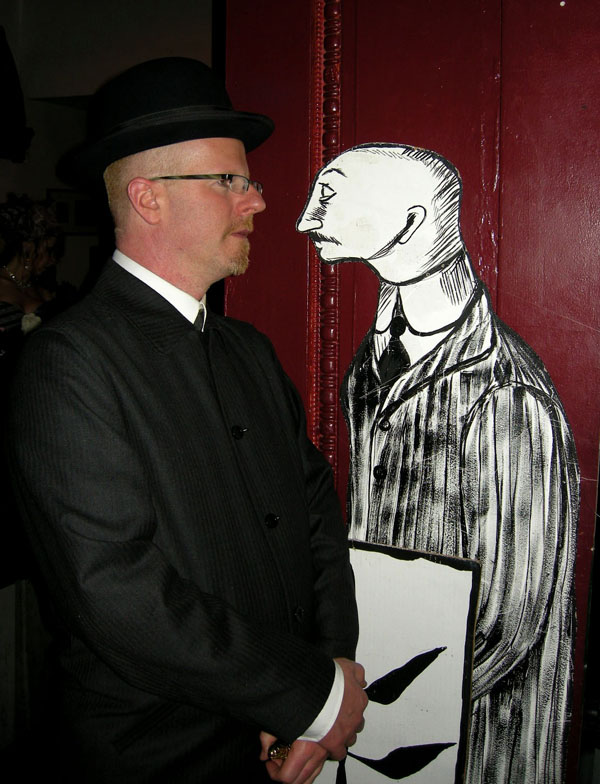
My friend and myself at the Edwardian ball in a photo taken by Lynne last weekend, similar in our stiff and wooden disposition. More here. The crowd was a bit gothic, although not as much as the Meat vs. Death Guild romp at DNA lounge a few weeks ago, celebrating death's warm embrace at least in choice of fashion and desaturated makeup.

But is Death is now a welcome guest? Heading off to hear Carla Kihlstedt play the premiere of Jorge Liderman's Furthermore... tonight on a somber note after his decision to place himself in front of an oncoming train yesterday. Although still "under investigation" it seems that he was sadder than his music. Hopefully he will now find some peace. My wife once told me that the fact that there was an exit available to her when she needed it kept her going through parts of her youth. I've thought about that many times over the years. Life is hard for all of us, but the life of a modern composer is that of a misfit, unloved and unwanted by most, if in fact 'most' even are aware that such an animal exists.

Monday, January 28, 2008

Wednesday, January 23, 2008

Stockhausen my Stockhausen


Tomorrow, Thursday at 6 pm PST on Bunnywhiskers, Thom Blum and Jim Bisso and I will be saluting the passing of the gun carriage carrying the mortal remains.

Update: here's the show podcast. The show itself should reach Sirius in 8.6 ± 0.04 years.

Saturday, January 19, 2008

Monday, January 14, 2008

Theological, phrenological, surgical


John Duykers performing I'm no murderer from Mordake at Intersection for the Arts, San Francisco, 10th of January 2008. Libretto by Douglas Kearney, directed by Melissa Weaver, production by matt:matt, costume by Kathleen Crowley, with some buzzy extra sounds from Thom Blum, filming by James Bisso, with a backdrop of an altered photo taken by Lynne of a bedroom of the Reutlinger House.

I wrote the gender changing software used at the end - a phase vocoder with formant shifting - for Korporate Marionettes. In this aria, Edvard Mordake tries to shuffle off responsibility for beating his man onto The Other, his shadow, his sister. The text setting in this opera is turning out to be a bit different for me, less driven by the prosody and with more common meters instead of the different-meter-on-every-bar or melodies floating in their own rhythmic world above more regular but still less common meters. Maybe this is because Douglas's words are more poetic and less prose-like than my usual texts. One unintended but happy result is that there is much less need for a conductor.

Saturday, January 12, 2008

akin to that of Antinous

Since the diminution of the Jesuit educational system, we artists can no longer count on the average audience understanding many Western cultural references that used to be taken for granted: the Classical, Mythological, Biblical, Shakespearean former pillars of cultural literacy. However, our librettist, in his bull-headedness, has chosen to ignore this fact, to eschew the requisite references to pop song lyrics and celebrity couplings and instead to rely on some of those very allusions, those facts unavailable to all of us whose education consisted merely of smoking dope in the girl's restroom and leaving thumbtacks on the teacher's chair until that sad day when social promotions pushed us out into the real world, woefully unprepared for highbrow operas. So, to remedy that, I will give a brief rundown of one that appears in the abridgement of Mordake which we are about to witness.

In the introduction, in reference to Edward Mordake himself, we find that "his face was that of Antinous." We ask: who is this Antinous? I say to you that he was a beautiful boy who, around about age 11, become the lover of the Roman Emperor Hadrian, in the fashion of the day, following the Greek tradition of the eromenos, to wit, the idealized pederastic relationship between an adolescent boy and an adult man, both best friends forever and pure lovers, seen to be part of aristocratic moral and educational development, military training, and, of course, Intercrural Sex, which you can look up for yourself in any accurate biography of Honest Abe Lincoln. At around age 18, possibly in an attempt to save his beloved emperor, Antinous drowned in the Nile. Hadrian's grief was unbounded and, following in the footsteps of the great Alexander, had Antinous proclaimed a god. Worship was widespread throughout the empire. There were cities named after him, temples built for his worship, festivals in his honor, a constellation named after him (until the regularization of the constellations by the International Astronomical Union in the 1930s), and many many statues and coins and busts and gems bearing his likeness, all recording his famous pouting lips, considered his most distinctive feature.

My favorite quote about Antinous (although unrelated to the story at hand) is this homophobic number from Gibbon's Decline and Fall of the Roman Empire:

The deification of Antinous, his medals, statues, city, oracles, and constellation, are well known, and still dishonor the memory of Hadrian. Yet we may remark, that of the first fifteen emperors, Claudius was the only one whose taste in love was entirely correct.

Friday, January 11, 2008

Mordake Appears

Our teaser presentation of the Mordake opera took place Thursday night to hoots and hollers from a pretty friendly audience. Note: I can recommend such an audience to all budding theater folk. Plus we got the audience good and liquored up beforehand (which I also endorse). The production came together well and it looked good in the Intersection space. John moved me to tears in one spot; he can work it when he needs to. The technology all functioned, from the formant-shifting gender changing to the video to the wireless speakers and everything. I'll be putting up a video or two but for now I've included a short clip from the Making of where I prompt John for the courage to go forward.


Saturday, January 5, 2008

Finally Stockhausen

I had dinner with Bunnywhiskers last Friday and she has asked me to do a Stockhausen tribute on her radio show sometime in the next few weeks. I'll talk about finding a brand spanking new and pristine copy of Klavierstück X in a sheet music store (now long gone as so many are) in downtown Los Angeles in the heady froth of the late 70s and immediately dashing home and cutting the fingers off some gloves to work my way through it, slowly, page by page, chordal glissando by painful chordal glissando, joyously drawing blood along the way. I'll tell her about the post-fire sale at the Tower Records at Berkeley in the early 80s where I was able to buy almost the entire DG Stockhausen catalog in white disco LP jackets (but I envied Everett Shock's copy of Sirius with the naked picture of the dear alien himself). And then the Tierkreis melodies - the music-box versions primarily - which sent me along the route of my own music box manipulations. And Momente, the LP I played every day while reading The Golden Bough, although isn't there something odd about listening to a fixed recording of a polyvalent piece of music, getting to know that particular performance so well that hearing the modules in a different order seemed wrong?

Which, since we are starting on a wander, reminds me of my sophomoric and adolescent pseudo-intellectualism where, having been force-fed the Wittgensteinian bologna about the lack of meaning of a private language, I took my recently purchased but yet unlistened-to copy of Daphnis and Chloe and played it for months at 45 RPM so when I finally heard the piece played normal-like, I would have a true private experience. Yes?

But do we all know Stockhausen's origin myth? I happened to see the original quote from the master of Darmstadt on Anablog, and here 'tis:

"I think that the culture of this planet has been mainly formed by visitors from Sirius, especially in the time between 9000 and 6000 B.C...I think that our main sources of present-day culture, as decadent as it may be in most parts of the planet, stem from visitors from Sirius whose main representatives were Isis and Osiris. Through a series of revelations which were at first quite nebulous, but have become more clear during the past few years, I know (as little as I know about details) that I have come from Sirius, myself."

Tuesday, January 1, 2008

My New Year's Resolution

is to survive from now till a week from Thursday: the Teaser showing of Mordake at the Intersection. It's a homecoming of sorts; I presented my very first chamber opera at the Intersection back in 1995. The Intersection is a beautiful intimate space and it's going to be great fun to put up a section of the piece there, also following the very important plan of getting everyone drunk enough beforehand to appreciate it all properly. But the survival issue comes from having a day job as well as a night job or maybe two lives in two parallel universes. Like Mordake, I can't seem to integrate both in healthy way. So far I've done it by stressing myself to the point of near death, working from morning until night on one and then from night to the week hours on the other, catching a bit of sleep and proceeding again.

The piece seems to be getting darker as we go further in. Maybe it's finding the horror tale it always was, that in our delight at working together we lost sight. I am seduced by the sounds and the music and the look and feel of it all, but it's been pulling me apart as well to face my dark self, waking up in a sweat in the night, just as children tremble and fear all
in the viewless dark.

Saturday, December 22, 2007

One too many speedballs

Duykers and I have been sneaking coke and aspirin out from under the watchful eye of Melissa, our dear director. She seems to think it a symptom of unhealthfulness, and doth not accept our need of it for our creativological inventionity. But I say more and more and more and to follow it up with shots of icy cold Belvedere, poured down my open throat by a young lesbian, hand on my throat, an unseen assailant yanking back my hair. But this is the way we artists must move our world forward, innit?

The Mordake story has become more personal for me as we have proceeded. Mordake has a problem integrating a perceived feminine shadow-self; a typical Victorian who represses all his imperfections, his vices, sexuality, etc, and who wants his nature blocked off in neat gardens whose borders are at right angles. Is there a modern connection between us and him, that his faults come from this difference between who he really is and the image that he presents to the world? I know that I have struggled with integrating the so-called darker aspects of myself with those images carefully chosen, and as well integrating the masculine and feminine, qua engineer and artist (which is which is left as an exercise for the reader).

It's been great to see the piece come together. It's wonderful to hear Duykers sing it - so much better than hearing me sing it, even though I do like the sensation physique of the vibrations passing through my body, the Navier-Stokesian eddies forming about my glottis, like The Eternal Syllable of the Hindu. Matt Jones leaps up to satisfy each of our whims, cutting bits of paper dolls when we require it, tearing apart circuits and speakers, rigging floating gramophones and of course subversively continuing to prepare the way for our robot overlords.

Friday, December 21, 2007

Queer Filler


Fred Dodsworth: Why "Queer"?

Erling Wold: I loved this book when I read it 15 years ago. I just identified with the character. I identified with the unrequited love in it. I was really taken with the language and the feeling of it, the emotion of it.

Q: Tell me about the emotion.

A: It's an autobiographical novel. The character William Lee is
Burroughs, and he falls for this younger guy named Eugene Allerton who is... it's a little unclear what he is. He's either closeted or indifferent or a hustler or something. He responds to Lee but he doesn't... kind of... (Nervous chuckle.) He responds but not completely. Basically it's a sad, unrequited love story. This is probably the best description of that I've ever read, either in gay or straight or whatever literature. This is actually one of my favorite kinds of stories.

Q: Why?

A: I like that emotion, that feeling where you're really drawn to somebody and you just can't have them. (Nervous laughter.) I'm very attracted to that kind of story and that kind of feeling. It's a very
romantic story. In fact, Queer, the character, is a hopeless romantic. That's a big part of the way it's done. Lee sings. Allerton only speaks. It's very much Lee's story. The whole story is told from Lee's point of view. All the characters are only there in as much as they are a reflection of what Lee is feeling for that person at that moment. They're never presented in any kind of three-dimensional way. He's kind of a boorish guy in some ways. He's kind of racist. He's an ugly American in Mexico City...

Q: Isn't this when Burroughs "accidentally" killed his wife?

A: He killed his wife and then became a writer. Allen Ginsberg thinks she was committing suicide. They were playing William Tell with a shot glass. Who knows? They were both drunk. He was an excellent shot. It's unclear what was going on. Burroughs and his wife had a very interesting relationship. They were very close. They were like soulmates, but he was a pretty gay guy. This is a time when people didn't tend to identify themselves as being gay, but he does. He's very outspoken about it. He's very open about it and, in fact, he's angry with the world because it interferes with all the things that are important to him -- being gay, being a junkie. The world gets in the way of that.

Q: Gay? Married?

A: Early in his life he was a big ladies man. He also liked men from early on. At this time he's living in Mexico City with his wife but he's totally going after all the Mexican boys he sees, plus this Allerton
guy, and he has this little circle of queer friends that hang around in this ex-patriot [sic: expatriate] bar community. I don't know what that all means. Later in life he became a misogynist. He decided that women were evil.

Q: Do you assume any responsibility when you promote this work?

A: I don't know if I take responsibility for every single thing but I do like certain things about his worldview. They do connect with me. I understand this idea that the world is in your way... that there're a lot of people who disapprove of what you're doing. That's VERY annoying.

Q: What is the responsibility of an artist?

A: I've come to believe you do it as a philanthropic gesture to the world. You're not in it for yourself -- not doing the kind of thing that I do -- that's not commercial. The only kind of reason I can see that makes sense is that you're driven to do it, but also, hopefully, you're giving people some cultural experiences that will be important to them. I think there's a certain amount of social responsibility, but I think that just comes from yourself. You just do things that are true to what you believe, and that's as much as you do.

Q: Are you trying to teach social lessons?

A: I'm not -- except in the fact that the things I pick are what I believe in. "I believe in this, but you can take it or leave it." (Laughter.) I don't know that I'm trying to convince people. I know that if you "touch" people, you tend to convince them of something that you believe. I like that. I think there's a place for social art. Some people who do it transcend it. You have to have something to get you started. For some people that's a social concept and for some people it's a theoretical concept.

Q: Is this show audience-specific?

A: No, it's not.

Q: Even with a title like "Queer"?

A: It's an interesting title. In a way his use of the word "queer" is more like "odd." He's an odd person. He's outside of whatever. More than being queer like it is now, which is a political word. This is all before that. It's weird. Oddball guy. It obviously means gay or fag or whatever but... I think there's a universal aspect to the story. It's a love story. It's also a crazy Burroughs' story. He goes on these large flights of fantasy. Those are enjoyable. But this piece is the first time I've ever had someone send me a nasty note back from an e-mail announcement, saying, "Take me off your mailing list," and sending a Bible verse along with it. I've done things that were loaded in the past, that were questionable, but this is still a topic that people get upset about.

Q: Do you think our local community still is homophobic?

A: Obviously. I think it's very strong. We're lucky we live in apart of the world that's much more reasonable about these things. Outside of this geographical area it's... very intense. Everybody knows this.

Q: I don't think everybody knows this. Let's go back to unrequited love, is that the natural state of love?

A: Noooooo. This is not every aspect of my life, this is one aspect. I think what attracted me is the strength of that emotion. Emotions like jealousy, unrequited love, desire, longing, in some ways those are even stronger than when you settle in. I think those emotions are stronger. I think I feel them more strongly. Since I come from a very emotional place when I write music, I think the stronger emotions even drive me more.

Q: Are you trying to shock?

A: There's a certain appeal to shocking people, to saying there's this aspect of life outside of what you normally think about. There are aspects of living that are not discussed a great deal. I do like pieces that touch on those things. Sometimes it's fun to shock people, just to shock people. That doesn't interest me so much, although sometimes it's fun. I like those certain aspects of life that are on the edge and I've always had things that interest me a lot -- sexuality, dreams, religion. It probably has something to do with the way I was raised. I was raised in a Lutheran family. My father was a minister and my mother worked in the church. Sometimes when you say to people you were raised in a Christian family that seems like some horrible thing. It was actually very pleasant. My parents were very considerate. In some ways they were more liberal than I was when I was growing up. I remember coming home from college and finding out they were active in some gay-lesbian community inside the Lutheran Church.

Q: Did you come out then?

A: Actually... well... here's an interesting thing. I am not gay. I'm not necessarily not a gay person but... I don't necessarily know how much of this I want published.

Q: You're the one that's producing an opera titled "Queer"

A: Well... I...

Q: ... and you're not even gay.

A: That's an interesting thing, isn't it?
Tuesday, December 11, 2007

Andrew Imbrie

Dealing with the shock of the death of Karlheinz Stockhausen, whose Deutsche Grammophon LPs I reduced to dust by playing them incessantly on my pitiful portable picnic player, I somehow missed the fact that Andrew Imbrie had died, my last remaining composition teacher. I'm quite saddened by this. I met him through my first teacher, Robert Gross at Occidental, who had premiered his violin concerto back in 1958, just a few months after I was born, in the heady days of the space age. From the Time magazine review, entitled "New Star:"

Slim, tweedy Composer Imbrie worked intermittently on his concerto for four years, completed it in 1954. As performed last week by the San Francisco Symphony, with Robert Gross as violin soloist, it proved to be a propulsive, clamorous virtuoso work in both twelve-tone and traditional diatonic idioms, with its limber solo line woven through the big sonorities of the orchestra in a stirringly unfolding tapestry of sound. The first movement, in alternating slow and fast tempi, built to its main climax by echoing the solo violin nights with orchestral figurations set at closer and closer intervals. By turns, the second movement was complex and agitated, waltzlike and melodic, with muted violins and then muted trumpets repeating the soloist's refrainlike theme. The third movement opened with rich orchestral tone clusters, built to a brilliantly frenzied solo violin flight near the close. The 700 concertgoers called Conductor Enrique Jordá and Soloist Gross back for half a dozen bows, twice drew Imbrie from his seat in the audience.

Both of them were wonderful teachers, both masters of insight, not gurus pushing their package of answers to all questions, but mentors, able to peer into the mind of the student and guide them to a better version of their work. I remember a class with Professor Gross (yes, don't forget the 'Professor' - both of these men wore suits and ties every day) where he first helped me achieve a proper discordant cacophony and arrhythmic nonsimultaneity in a section of my setting of The Waste Land (have I burned that score yet?) and then immediately turned to help the next student achieve the ultimate in sentimental maudlin kitschiness by adding just the right bass note to his three-hanky oversugared stack of thirds. And all this even though he had accepted the serialist way and maybe even the dogma of its historical inevitability.

But dear Dr. Imbrie could do the same. At the time I met him - in late 1978 - I had reached my pinnacle of unlistenability: a concerto for contrabass playing in 8th tones accompanied by a trombone quartet in 6th tones and chorus singing slowed-down IPA transcriptions of the screams of the insane. He dug into the score, somehow sight-reading an approximation of it at the piano (which I had never even attempted), pointing out some structural imperfections along the way, noticing a bare fifth in the score (Heavens to Betsy!), talked to me - seriously - about who might be able to perform this unperformable piece and so on, never questioning why I would be wasting perfectly good staff paper on such a horrid odious slag heap of nonsense.

But I think that's what a real composition teacher should do, especially since the twentieth century destroyed any notion of right or wrongness or direction or mainstream or anything. We've all become pioneers in our own fable of the Wild West, especially those of us who actually live here on the left coast. To meet someone along the way who can read the signs and help us find our way - this is quite special. To have been attended by two such special people - well, this simply makes me embarrassed that I haven't done more with what they gave me.

Thursday, November 29, 2007

Not a review of The Rest is Noise

I'm absolutely enjoying Alex Ross's new history of music in the 20th century, viz., The Rest is Noise. It's hitting me at just the right time to be sure: a time of reevaluation of my musical existence and a time of casting back to the composer-idolatry of my youth. But can I quote a bit here without fire and brimstone raining down on me from the Farrar, Straus and Giroux legal department? Not sure, but here goes. In writing of Shostakovich's seventh, we find that:

Besieged Leningrad heard the symphony on August 9, 1942, under the most dramatic circumstances imaginable. The score was flown in by military aircraft in June, and a severely depleted Leningrad Radio Orchestra began learning it. After a mere fifteen musicians showed up for the initial rehearsal, the commanding general ordered all competent musicians to report from the front lines. The players would break from the rehearsals to return to their duties, which sometimes included the digging of mass graves for victims of the siege. Three members of the orchestra died of starvation before the premiere took place. The opposing German general heard about the performance in advance and planned to disrupt it, but the Soviets preempted him by launching a bombardment of German positions--Operation Squall, it was called. An array of loudspeakers then broadcast the Leningrad into the silence of no-man's-land. Never in history had a musical composition entered the thick of battle in quite this way: the symphony become a tactical strike against German morale.

Ach du lieber, how can a petty and petite bourgeoisie composer like yours truly even begin to compete in this real world? To have both the Germans and the Soviets planning their artillery bombardments around the premiere of one's next composition! Obviously life is too easy for me. I need to have a freeway fall on me or have my family die of the plague or something. But the book is rejuvenating me, thrilling me, giving at least for the moment a reason to go on.

Tuesday, November 27, 2007

The Bed You Sleep In: A Warning

A favorite moment from The Bed You Sleep In, where Thomas Morris as the oracle has just hinted at Ray's impending doom. He recites a bit of Revelation 14 and we head off on one of Jon's landscape love-ins. Jon told me that the location of a story was as important to him as plot or character and deserved equal time. The music that starts about one minute into the clip is almost entirely derived from field recordings that Josh Rosen and I made of the local sawmill in Toledo, Oregon, now closed down because, as they discuss in the movie, you can't get any of the big trees anymore. (And why not, you ask? Because they really did clearcut the whole state and ship the uncut trees off to Japan.) But the sawmill was a beautiful aural environment. Walking through it was like listening to a futurist symphony and the raw recordings were beautiful, but of course I felt like I had to prettify it all a bit, and I think I was successful in that. I've bumped up the volume of the music in the clip so that it is a bit more intense, but you can hear the original music here or on the full soundtrack recording here.

Saturday, November 24, 2007

The Poetry of the Masculine Corset

I can't resist tooting my own horn and licking my own boot and linking to my couturière Kathleen Crowley's mention of my sartorial splendor. I work hard to be a fop, a dandy and a trendoid hipster, a poseur and a coxcomb, and I have gained some small success in this endeavor. Unfortunately such vanity takes a tremendous amount of time, stealing away from my reason-for-living, the music, the productions, the networking cocktail parties and my great 9th symphony, whereafter I die happy. But Kathleen is the best of the best, and she has supplied me with a steady stream of frock coats and corsets and jabots and high waisted pants and other frills and follies. Obviously I was born far too late and into the wrong class anyway but we can please dream of a different life can we not?

Monday, November 19, 2007

undertaking, similitude to painting

Many Western classical composers have became enamored with their scores but, although scores are sometimes very pretty, they aren't really the thing itself, are they? I happened to run across this old and somewhat embarrassing program note of mine in one of my many self-googling expeditions:

"I worry constantly about something Gerard Grisey said to me: 'Our ancestors confused the map for the territory.' Although he was speaking of the way Classical and Romantic composers confused notes for sound, this complaint could just as easily be leveled at composers who are more interested in concept or structure than sound. In fact, I would say that even the sound is less important than the effect, the representation of the work which exists in the listener's mind and body. To gain control over this, one must use the entire language of music available, be very aware of the feelings which develop in one's own body, use systems which give you complete control over all aspects of the sound, and, maybe most importantly, play at high enough volume to shut out all other effects." E.W.

I think most of the music I have written has been more-or-less front-to-back, at least conceived of as a linear structure in time rather than as an object, even if there is some attention to the architecture or foreshadowing of what is to come. Morton Feldman has talked about the influence of his painter friends on his composition and how he approaches a score like a painting, putting up a large gridded paper and skipping about to fill in the details here and there. My friend Craig Harris has pushed for tools to facilitate this kind of work. I'm finding myself doing the same with the latest opera. I've set up a huge timeline inside of Digital Performer and I'm filling it in with orchestral and noisy recordings and electronic this and that as well as synthesized lines. A libretto gives a structure and I'm not sure I could write a large instrumental piece this way; it just isn't the way I think. But as I've been working on this piece I've been expressly thinking of painterly analogies, maybe because I live with a painter and I seem to have more and more painter buddies. Like Lynne, I have been blocking out some sections very roughly just to get an idea of the whole, then going back and refining and painting in the details. Like Amy, I am painting on layer after layer, the final color and rhythmic texture being a rich mix of bubbled up sound. In my electronic works at least, I seem to like a lot of layers, foregrounds and backgrounds and in between.

Sunday, November 18, 2007

Touched by greatness

I finally met my internet friend Amy Crehore in the flesh at the Green exhibition in Santa Monica last night. Her very erotic and luscious layered painting Deja Vu Waltz (detail to the right) was featured in the show, and by *featured* I mean that it was without a doubt the feature attraction. We tried to find the afterparty at Zanzibar afterwards, but it didn't seem that anyone else showed up and, after being told by four ebullient and somewhat scantily clad young women that the club was, well, cough, and sotto voce a bit more for 'younger people' meaning not us, I ended up taking her out to dinner as a postpartum celebration. Let me take an aside here to point out that I had been stricken with a bit of the Irish flu all that day since dear Lynne's dear mother had been attempting to afflict me with alcohol poisoning the night previous, but all indisposition was dispelled as the first cool and healing touch of the hosted artshow bar's Skyy Vodka - which I had sensed from across the parking lot - touched the back of my throat. Not my usual brand as I am a bit of a snoot and supercilious snob when it comes to vodkas but still deserving of the appelation aqua vitae, ever blessed and most pure holy water. Anywho, Amy is a lovely, passionate, talented and unassuming person, deserving of her recent fame and her rôle as the next big thing.

But being here in Malibu helping Lynne with an installation reminded me to call an older and dearer friend Lady Lisa Lyon, one of those people in my life that I can call and and our conversation immediately takes up where we left off even if we haven't talked in ages. I'm so fond of this Mapplethorpe photo of her, which is how we met, receiving a fan postcard from her fronted with the image just a few days after I had stood, tumescing, gazing at a large print of her emerging from the foam like Aphrodite. Her adoptive father John Lilly and I shared an Alma Mater as well as an interest in the edges of experience (and, I suppose, a household full of beautiful women if I had been so fortunate) and he queried me after an isolation tank experience as to whether I had been able to communicate with some of the beings who control our very lives.

Wednesday, November 7, 2007

Compositional Process

In the afterword to Revenge, Stephen Fry discusses how the author, upon the arrival of the new book, is asked the only questions that matter to the reader:

"Do you write in longhand or on a computer?" If longhand: "Pencil, ballpoint, or old-fashioned ink pen?" If computer: "PC or Mac? Which font do you prefer?" No doubt if you were to reveal that you dictated your work, there would come a fresh slew of questions: "Into a machine or to a secretary?" "Sony or Panasonic?" "Male or Female?"

I'm guilty of this as well, having read in his blog with some delight of his Mac addiction, and I've faced myself this desire for knowledge of the process, the software used, whether one improvises, writes at the piano or on the plane, what you read or listen to, the view out the window while you were writing or composing or painting, the current boyfriend or girlfriend, the day job, the music paper, the scratching out and revising or the acceptance of the first draft. Is it, as Fry suggests, the questioner's desire to find the secret the getting that one novel or symphony or film that everyone has in them out into the world? If one just had the right pen or automatic screenplay formatting program or instrument library, the 36 weeks of gestation would suddenly be up and the great work would appear? I think that, for me, as a creatrix myself, it may be a desire to be normal, to know how to behave, to find the correct religion of artistic production, like the endless letters to sex columnists that start with a confession about one's particular kink, and end by asking whether this is OK, natural, normal but please not ordinary.

My fellow blogger Amy Crehore has been covering the production of one of her new paintings step by step and I have been thinking of doing the same for the new opera, but she can easily take a snapshot of her work and I'm not sure the parallel for music. I believe her motivation really is pedagogic, and I'm not sure of mine and I'm not sure it would be helpful to anyone. But some have complained about the disaster awaiting graduate students of the future due to the computerized lack of compositional notebooks and drafts and tearstained letters to scrutinize, e.g. this lovely examination of fingering in Stravinsky, so maybe we owe it to the future to make the attempt to leave behind a trail of crumbs. And that should be it, I think, just the trail and not the self-examination. On the Kalvos and Damien site, Jacques Baihé has a beautiful rant which captures the compositional process in detail and I quote:

When I write, I sit at the keyboard and hit the keys. If it sounds good, I write it down. Then I go back to make it better -- brilliant even -- and inevitably make a horrid, inscrutable mess. Can’t remember why I ever thought these plinks and diddles and screeching would ever make a piece of music. It’s late at night, yet again, so I keep tinkering. Kids are asleep, wife gave up on me long ago, so they don’t mind. I scribble and hum to myself, and try to remember important clues to the mystery of music I stored away while reading Rameau, Piston, Berlioz, and other wizards. I guess I don’t read accurately cause when I do what I remember they said it sounds absolutely awful. "Place the sixth tone over the ninth and balance two horns in F with obligations of contrabass." Something like that, but it never works, and they never tell me how to get this fizz sound I’m after.

Monday, October 29, 2007

Or we will all die

I've been meaning to mention Jarod DCamp's new microtonal radio station 81/80, aptly named after the comma of Didymus, one of my most favorit-est intervals, appearing in a melody in Tune for Lynn Murdock #2, at least as I remember. The radio station is a great source of serendipitous discovery, a very eclectic set of tunes showcasing a wide variety of styles, putting paid to the oft-said notion of the microtonal 'style.' The station features a number of people I've met over the years, plus all those who came after I stopped paying as much attention, and the web site seems to have an old picture of me by Debra St John. Note that Kyle Gann has blogged the station and we would all do well to search in this entry for the current blog title and read the surrounding paragraph. I myself have promised to do a little tuning up of the Mordake opera.

And, by the way, changed the color scheme on my website to match a newfound interest in truth, honor and transparency.

Thursday, October 18, 2007

Gerard Grisey changes a tire

I went to see Alex Ross speak tonight at Wheeler Auditorium on the campus of my nourishing and most bounteous mother the University of California at Berkeley. The talk was a brief overview of twentieth century music and the Bay Area's contributions, especially those of the more famous of the minimalists, since many of them had their early careers here. He's on a combined book tour (The Rest is Noise) and trip to see the premiere of Appomattox by Philip Glass at the San Francisco Opera. Lynne and I saw it on Tuesday and I was weeping unconsolably afterwards for the loss of one of my heroes, drinking one Baileys after another sitting in the Biergarten at Zeitgeist. I should have given up after Galileo Galilei, for which we also made the mistake of making an effort to see the premiere (at the Goodman Theater in Chicago in the hot midsummer of 2002). John Duykers asked me to go to the latter since he was starring as the mature GG, but some terrible truths are better left unknown.

Even though Jim Bisso stood me up for Berlin - Ecke Schoenhauser, I did finally meet Richard Friedman in the flesh, and Paul Dresher was there. In 1990 I was in Japan for Yamaha demos and I went into an enormous music store in Tokyo - don't remember the name - where I picked up a tremendously beautiful edition of the complete scores of Satie. But the small heart lifting experience was finding the 'west coast composer' section which contained only two CDs, Paul's and mine, proving that from a very great distance two people of such markedly different stature can look almost the same size.

Speaking of heroes and those of great stature, I've been thinking about Gérard Grisey a lot lately. Partiels is a tremendous work and he died way too young and neither he nor I could change the tire on my old yellow VW bug when it blew out on the way back from Stanford.

Friday, October 5, 2007

In my country I have coat of dog

While I was drinking my way through Old Europe last week the Mordake Suite #1 was played on Music from Other Minds, the radio arm of the Other Minds Festival, hosted by Jim Bisso's friend and former colleague at Sun Microsystems Richard Friedman. Jim was in fact 'riffed' from his job last week and has once more taken the reigns of the gelded stallions of the Leisure Class, giving him more time to work on our sex comedy libretto. Oh, how I wish for such a forced retirement, the placing in the lock of my golden handcuffs the sacred key of freedom, to write the next in the series of my great works. After my trip I'm so in the mood to get back to it all, having had my arms loaded up with inspirational moments, visiting old friends in the arts and the technologies of art. I went to see my drinking buddy Alexei Kornienko conduct the piece of high modernism Evocation (1968) by Dieter Kaufmann, a Carinthian composer, in the Konzerthaus Wien with Elena Denisova as the violin soloist. The piece thrilled me like I haven't been thrilled for while, the sound of 40 strings and voices playing in a divisi cacophony of dramatic gestures, the members of the chorus frantically covering their ears and listening oh so closely to their tuning forks to get the next entrance, the soprano leaping from one unsupported frequency to one as far away as possible. I'm inspired to try to reach that level of dramatic height with my own poor fumblings through my own quite different approach. But I went because Alexei has conducted all my European opera performances, including the German versions of both Sub Pontio Pilato and A Little Girl Dreams of Taking the Veil, and Elena's 13 Capricen is an incredible virtuosic firework of violinism. Lynne was there as well, tolerating the din as she has not quite the acquired taste for it, but taking some lovely photos of the cramped stage. She's blogged a bit about the trip included some pics of me here. And, speaking of the blogging illness, filmmaker and colleague Sierra Choi seems to be now hacking up a bit of phlegm as well, writing anecdotes about me and also using our home in the pilot for her latest TV show. Some of Lynne's lovely works appear as well as my recent li'l waltz.

Right, the title. We met up with Erika and Pete on their belated honeymoon in Vienna. Erika works at Torso Vintages here in town and related following incident: Russian woman fingers vintage mink, a hard edge of disdain apparent, turns to her and says with that accent, ...

Wednesday, October 3, 2007

soleil d'or

Since Jesus was assumed bodily into heaven, there aren't many bits of him available to venerate, but a lovely umbilical cord reliquary is just a block up from our Paris Apartment at the Cluny (see to the right: De Umbilico Domini Jesu Christi) and of course there are the many pretenders to the præputium scattered about Europe.

Yesterday's adventure was being allowed into the atelier and other sancta sanctorum of the Chateau de Versailles by Lynne's friend Laurent, a peintre décoratif who has the magical key that lets you through any door at the place. And, as a sign of special affection and respect, our friend Emily the gilder was given a large and faintly odorous piece of rabbit skin glue by one of the master gilders there, a two year supply for and a necessity for the lengthy but infinitely superior water gilding process. Whillikers, they use a ton of the stuff there to coat most every surface with gold and more gold, dogs of gold, arrows of gold, shields of gold, helmets of gold, and especially the golden rays of the sun to glorify the sainted King Louis, Le Roi Soleil.

And today, took a pilgrimage to IRCAM to visit Michael Fingerhut to talk about digital libraries and music information retrieval and life and death and get the ten dollar tour of the place, a place of my dreams for so many years, underneath the Place Igor Stravinsky, imagined as a place with stone steps worn by so many knees. Discovered today that Gérard Pape is director of CCMIX (Xenakis's UPIC) and have tried to get in touch but no luck yet. We corresponded a few years back when we found we had both written operas on Max Ernst's A Little Girl Dreams of Taking the Veil. I haven't heard it and I don't believe he has heard mine. Ah well. In trying to find Gérard's address, discovered that Matt Heckert had also considered an opera on the same book.
Related Posts with Thumbnails